
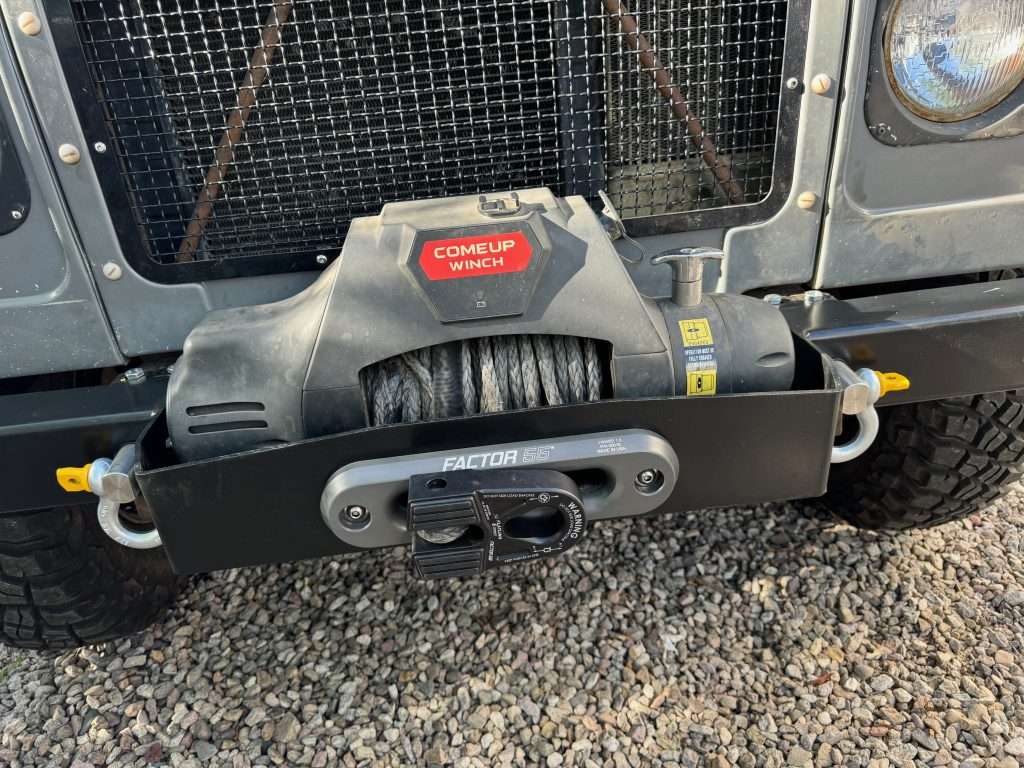
My COMEUP Winch 9.5si came equipped with roughly 3 to 4 feet of 2 gauge, positive and negative power cables. While these lengths were sufficient for the Jeep Wrangler, in which the winch was originally installed, this wasn’t remotely enough length to reach the battery under the passenger seat of my 1991 Land Rover Defender 110.
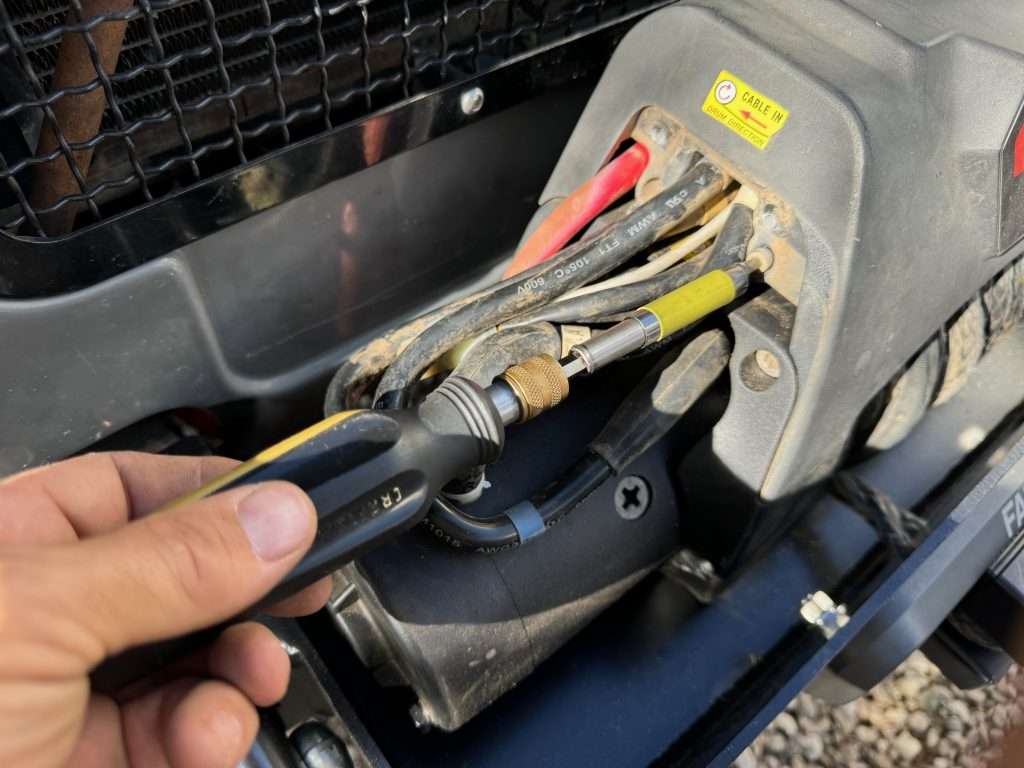
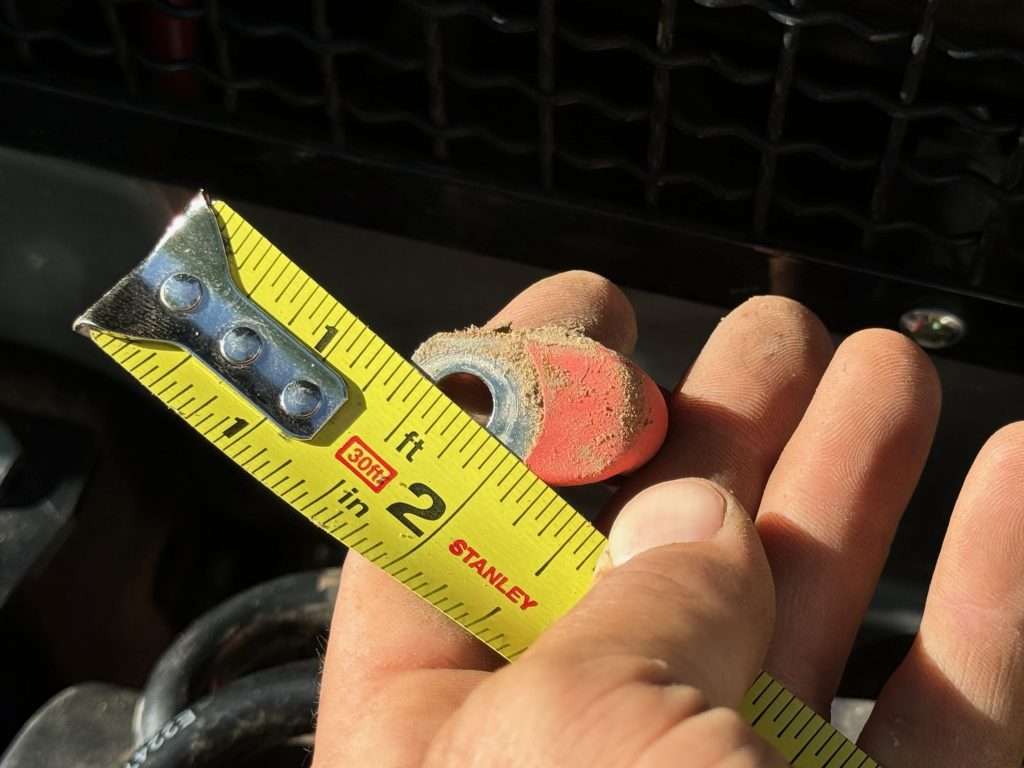
I started by unbolting the winch and dismantling the plastic solenoid cover to identify the power cable attachment points. This is where I identified that the winch utilized 2 gauge, and measured the ring terminals to confirm 5/16″ diameter.
Online research indicated that I would need power cables around 13′ in length to make the distance from the front bumper to the battery compartment. Also due to the longer run, a larger wire size should be used rather than the original 2 gauge.
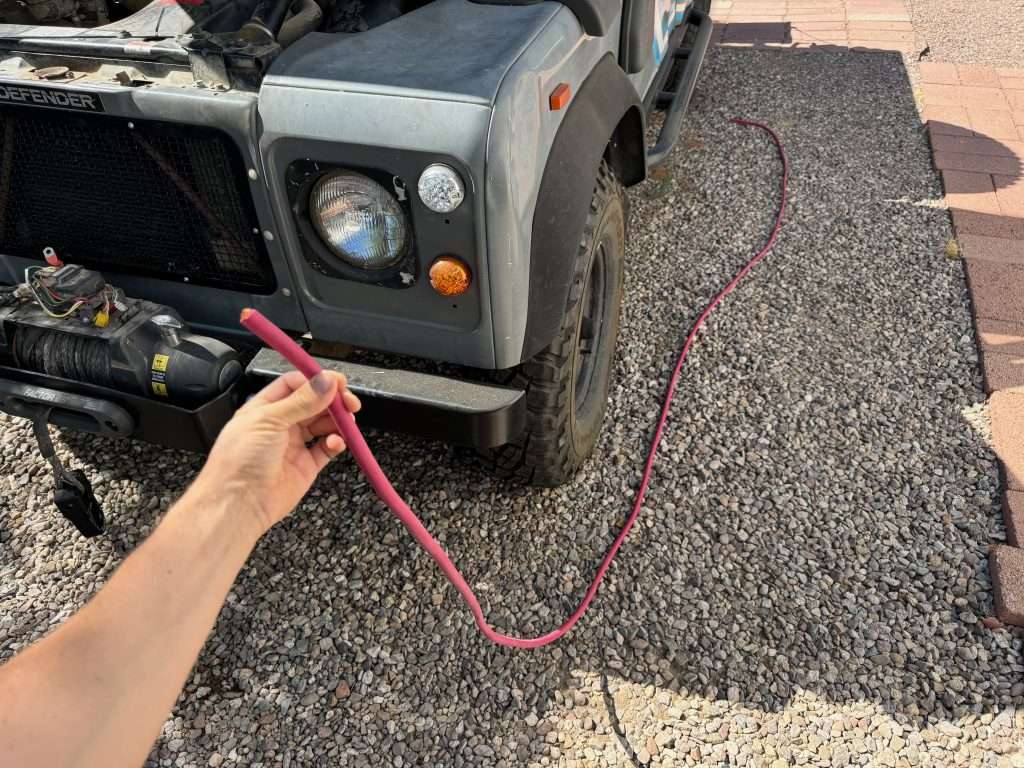
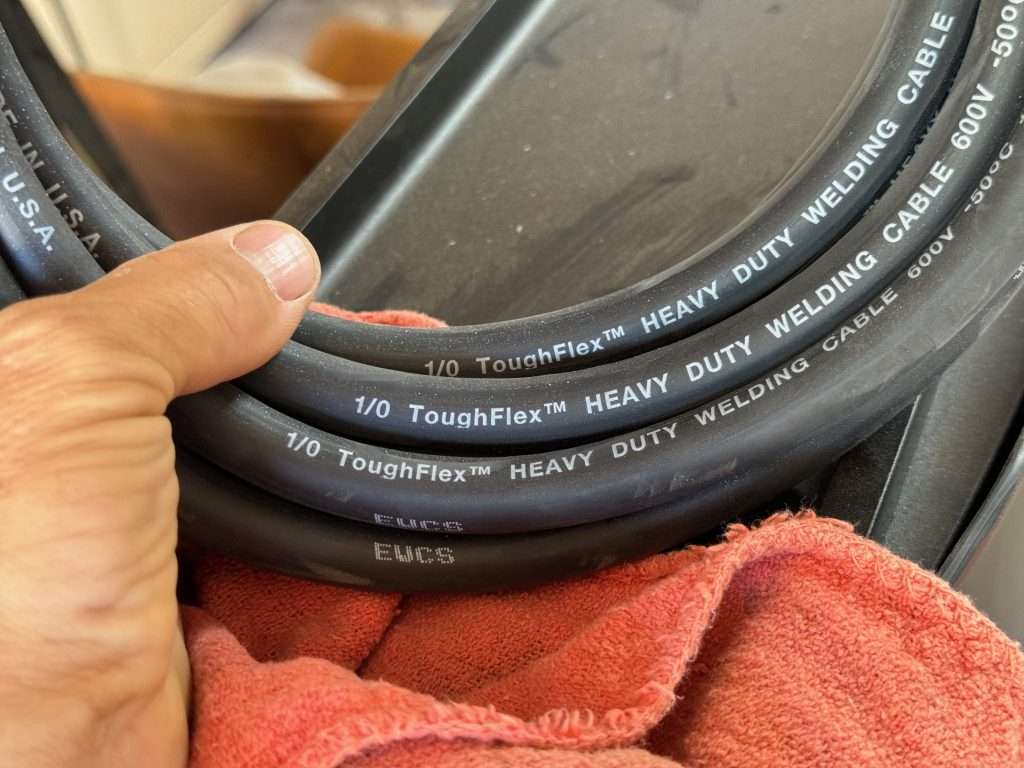
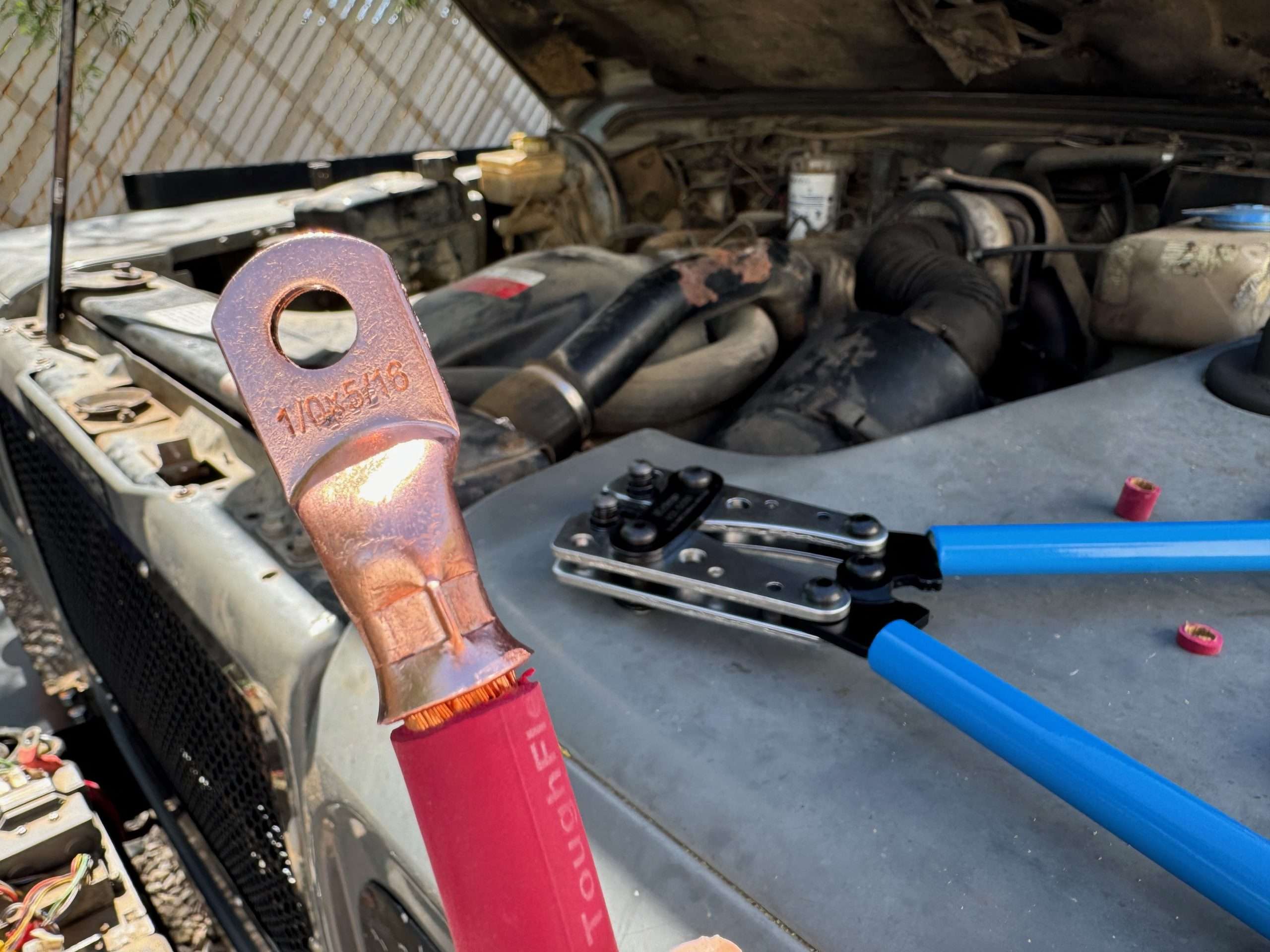
I ended up going with two lengths (one red and one black) of 15′ flexible 1/0 welding cable, with copper 5/16″ ring terminals, and ordered everything through Amazon.
What do we need?
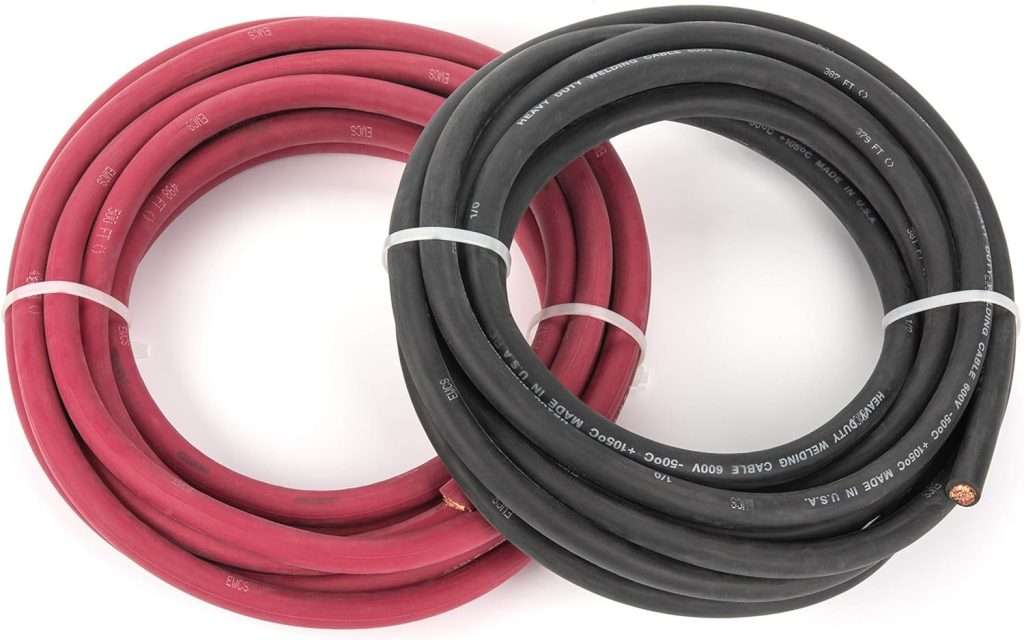
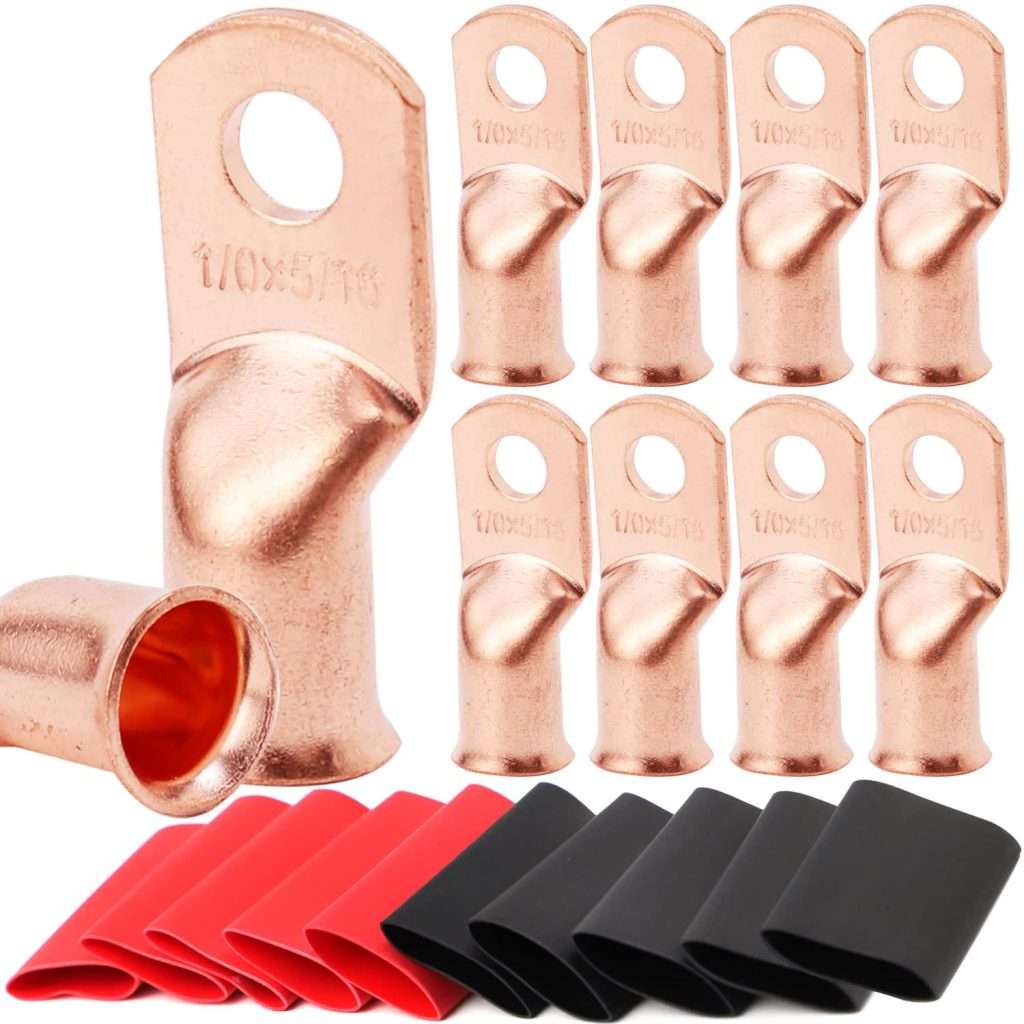
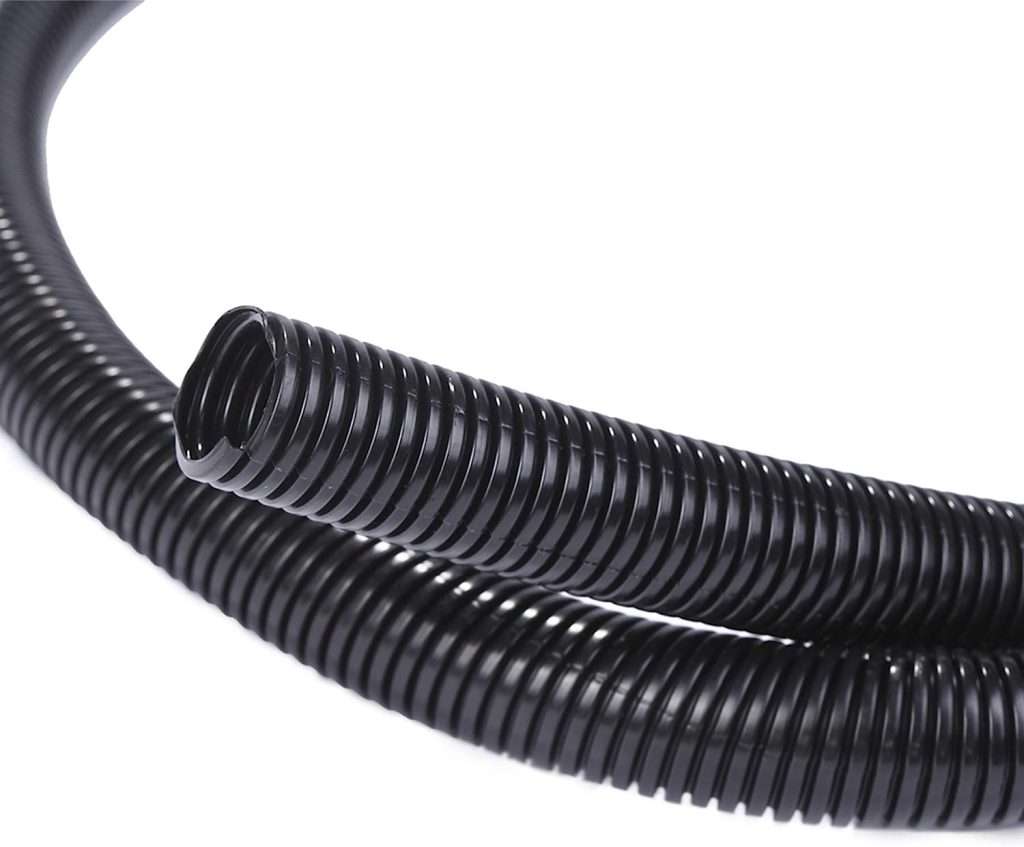
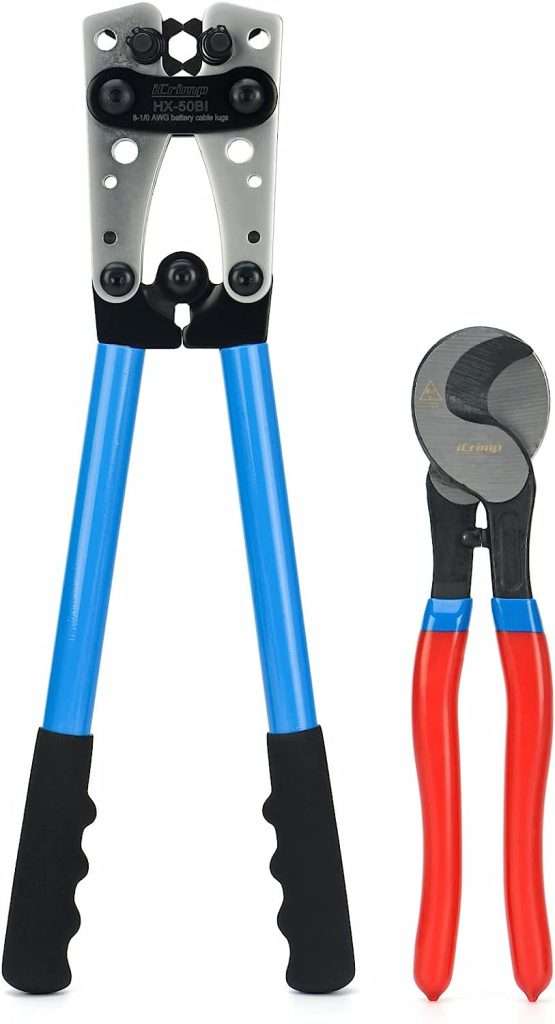
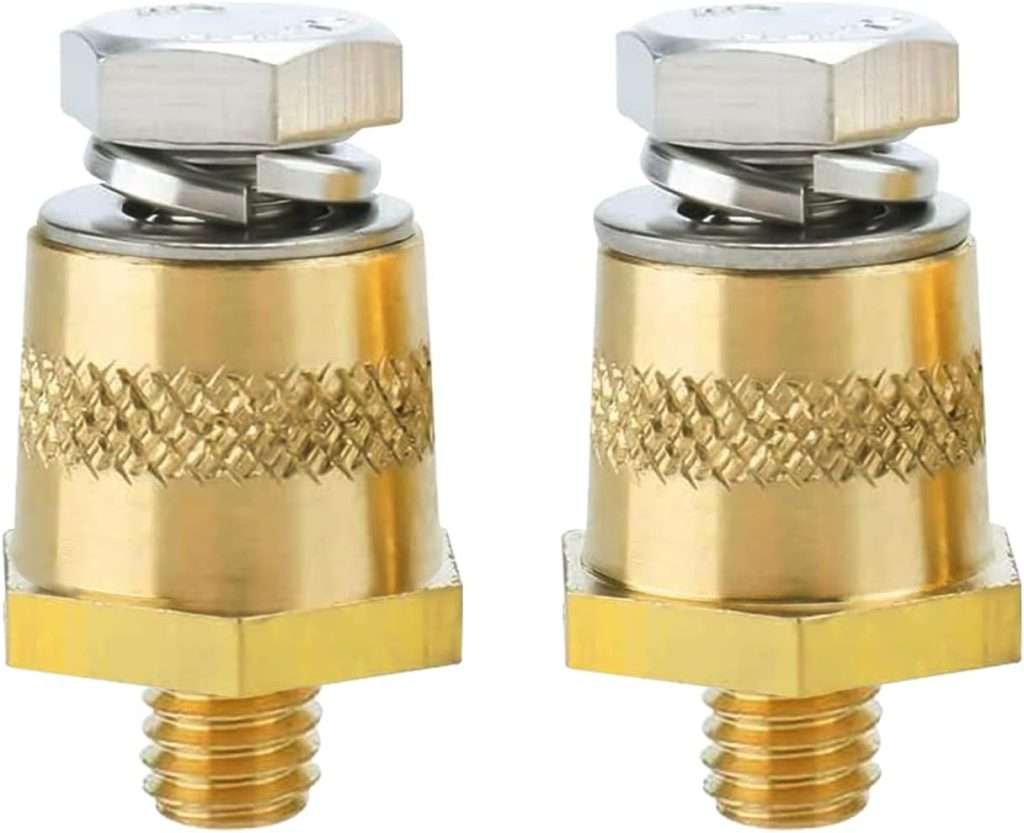
Let’s get started!
After the parts had arrived, I crimped the ring terminals onto the winch-end of the 15′ lengths of welding cable, and installed the heat-shrink tubing.
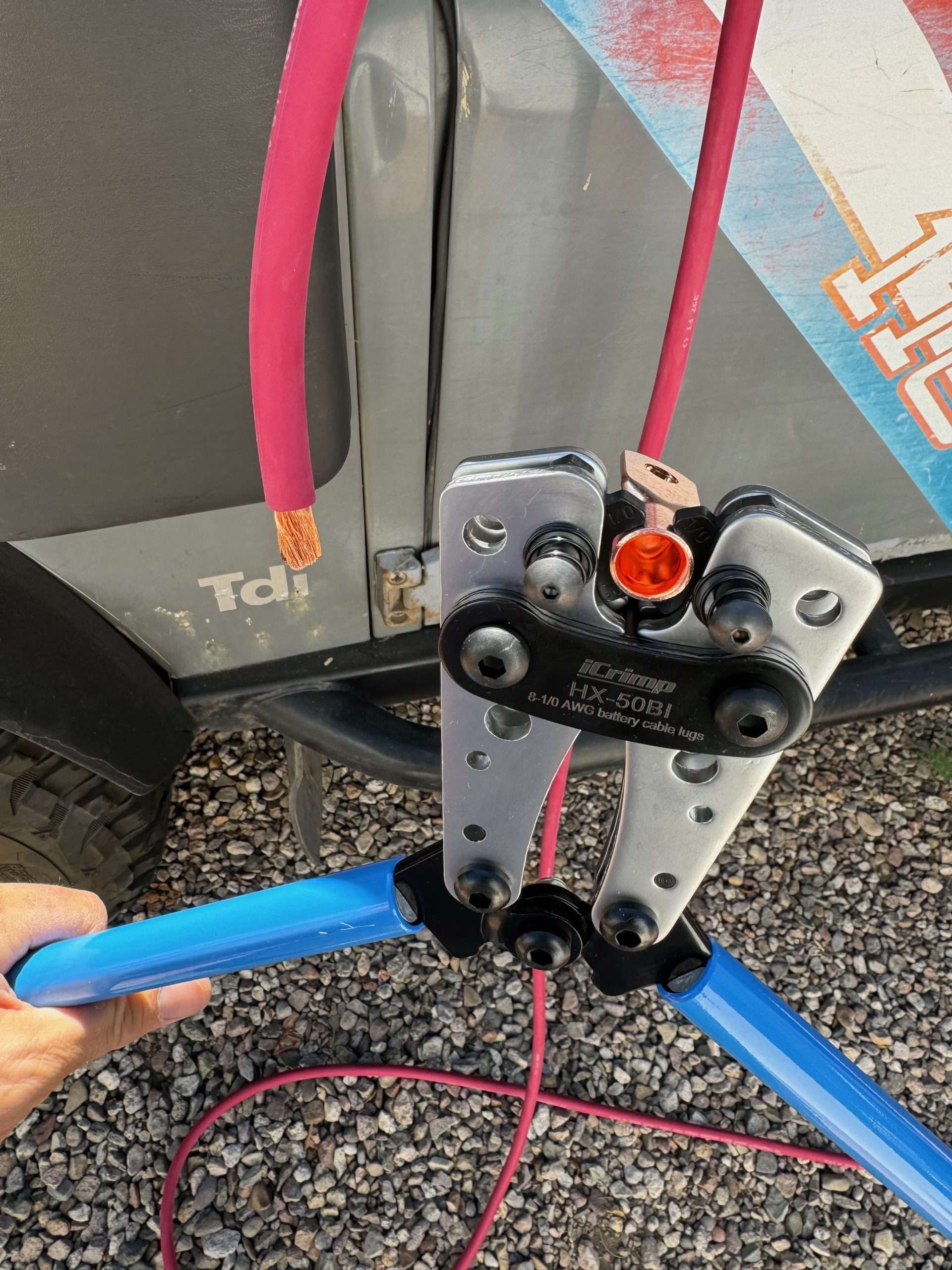
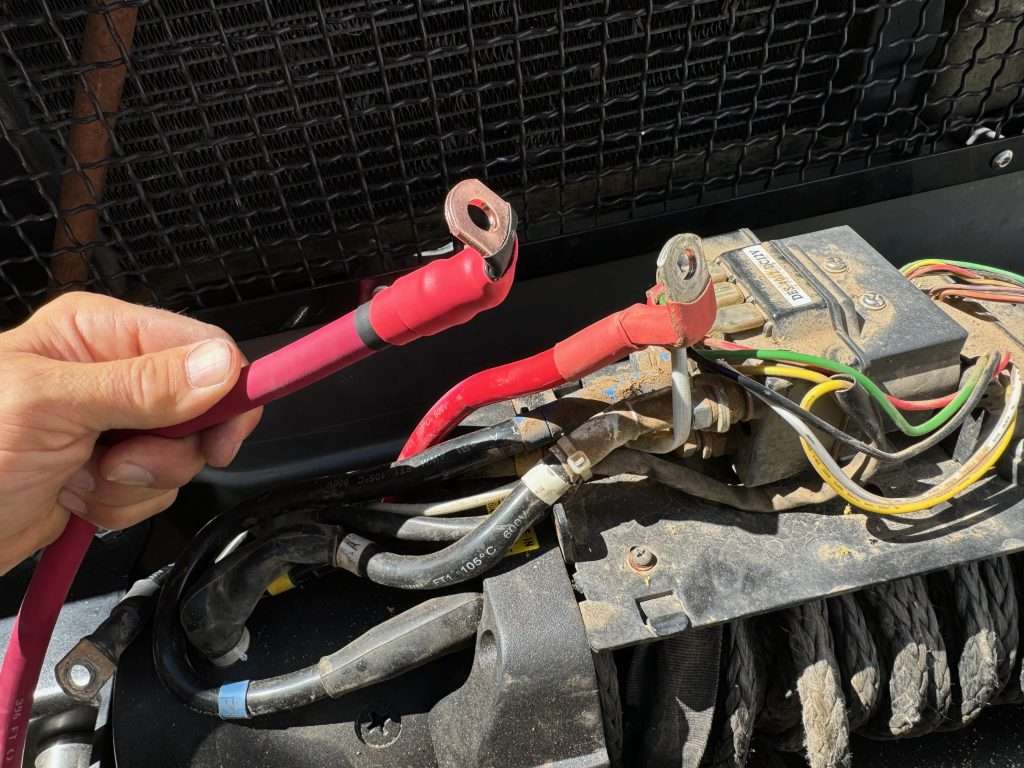
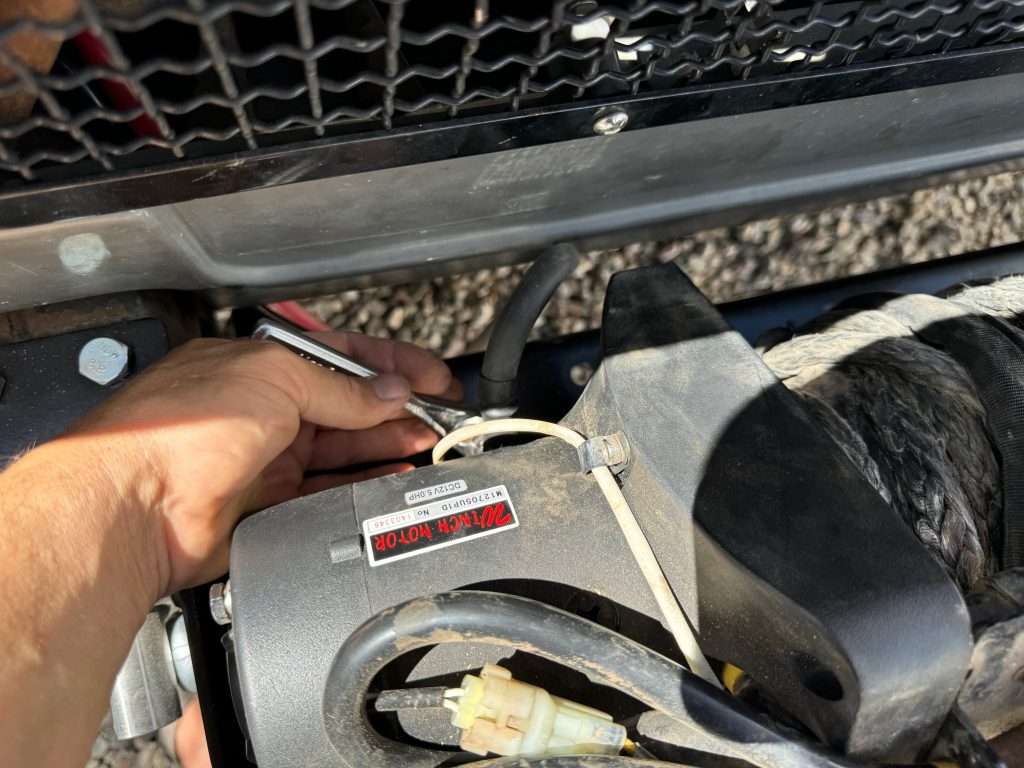
Then, I attached the new cables to the winch; the positive cable to the solenoid assembly and the negative cable to the electric motor itself, just as I had removed the former wires.
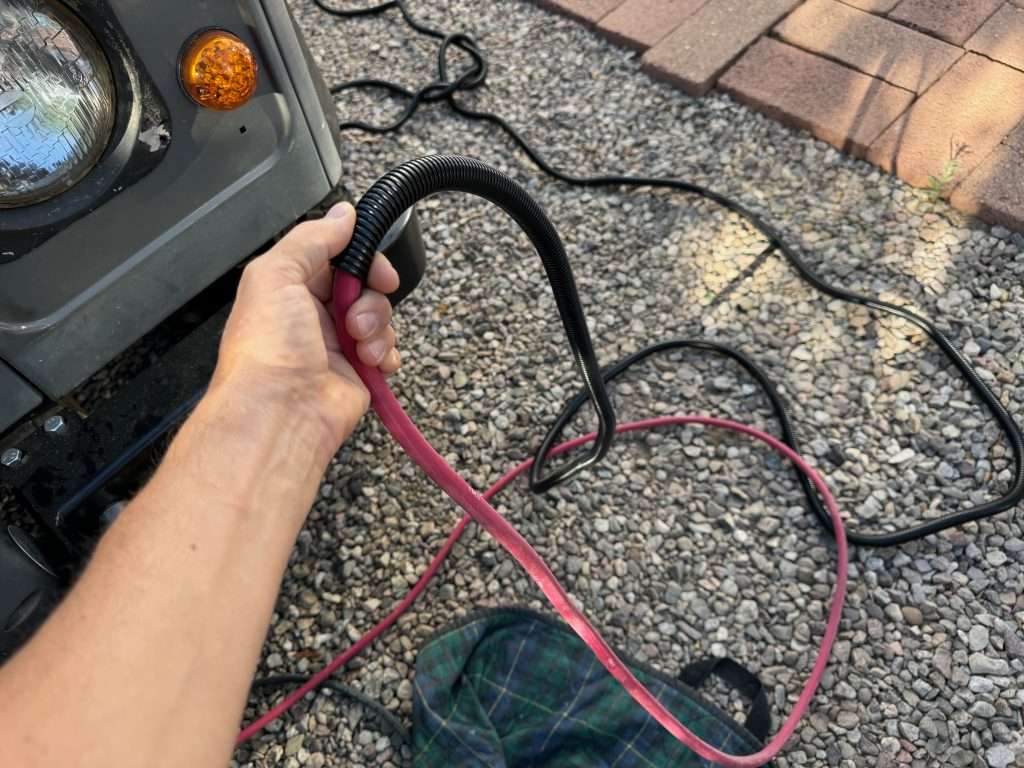
To provide additional protection for the positive power cable, I fed it through 15′ of 3/4″ split wire loom, which fit the beefy 1/0 welding cable with little room to spare.
Routing is a little bit tedious
While replacing winch power cables is a relatively easy project, the tedious part is almost certainly routing the 15′ of welding wire to the battery compartment located under the passenger seat. I did so by running both power cables along the top of the passenger side frame rail, which provides a direct, protected, and mostly-unobstructed route.
I ensured that both wires were clear of sharp edges, away from heat sources, and were securely fastened.
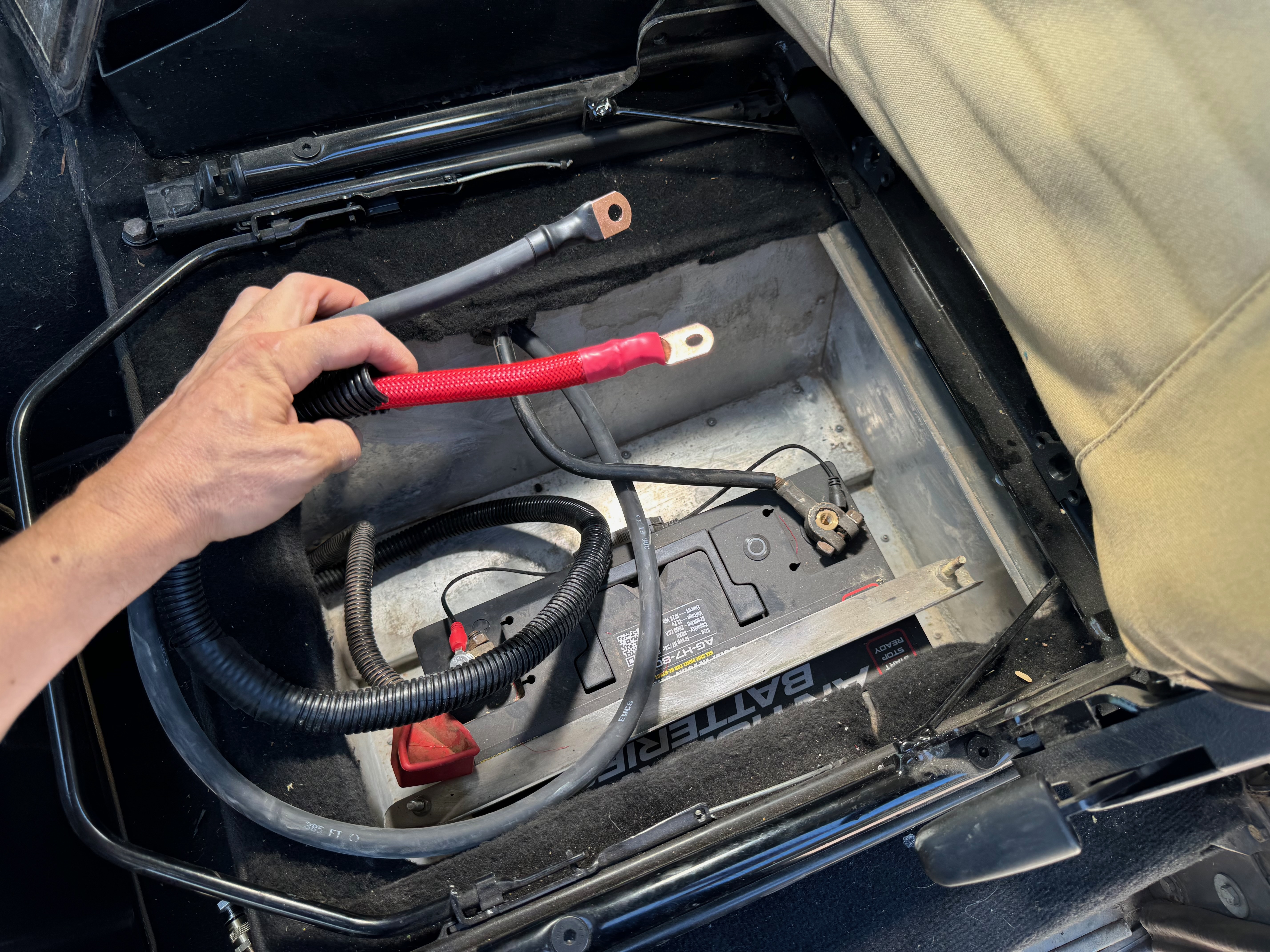
Once the power cables were fed into the battery compartment, I cut the excess wire, which yielded about 3′ of scrap for each wire. Then, I crimped on the new 5/16″ ring terminals and installed shrink tubing.
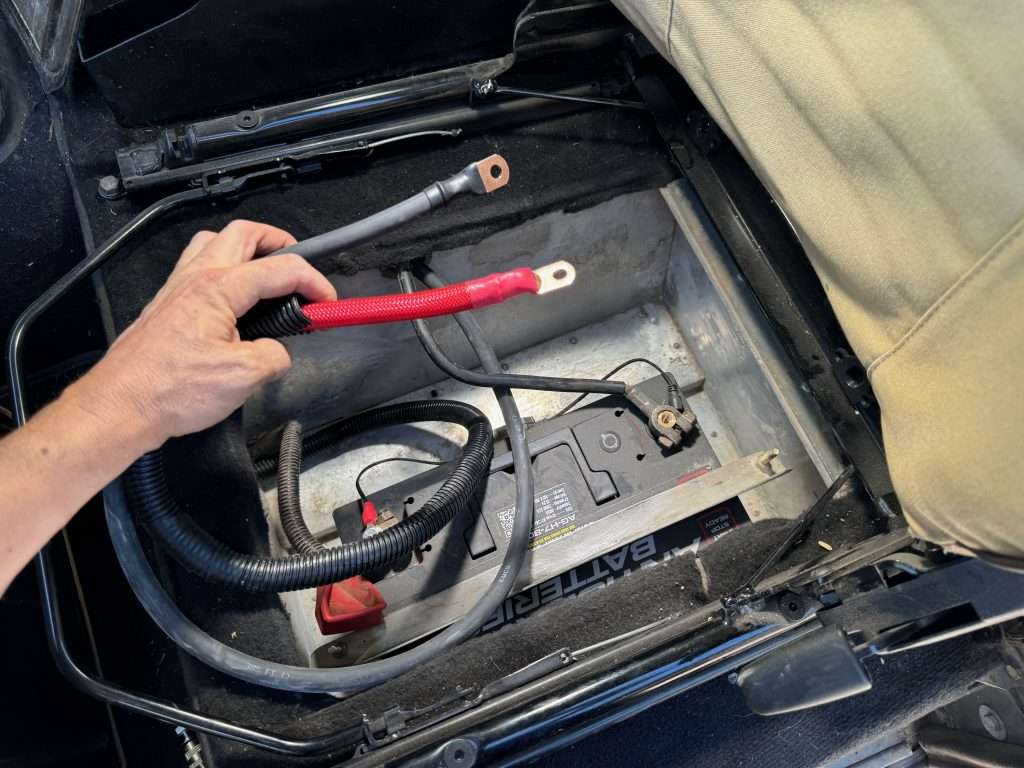
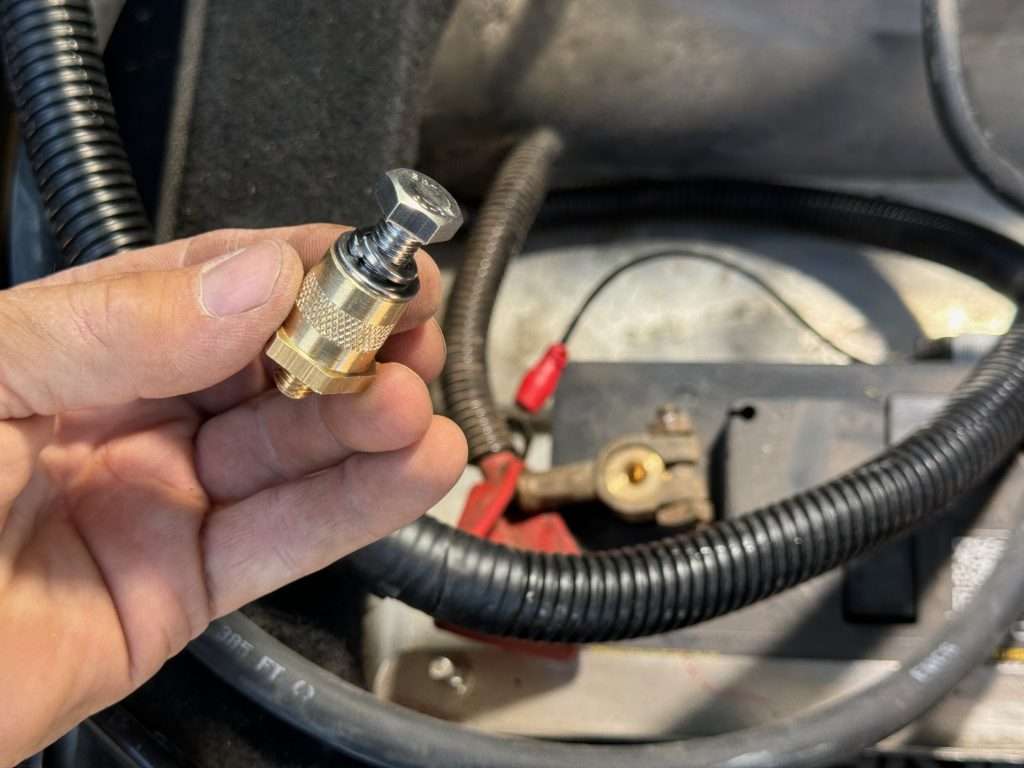
The Antigravity lithium battery installed in the Defender is fitted with threaded posts, which makes it easy to cleanly attach other 12V accessories, especially with the assistance of brass stand-offs, which are helpful for decluttering, but not necessary.
A tidy battery compartment
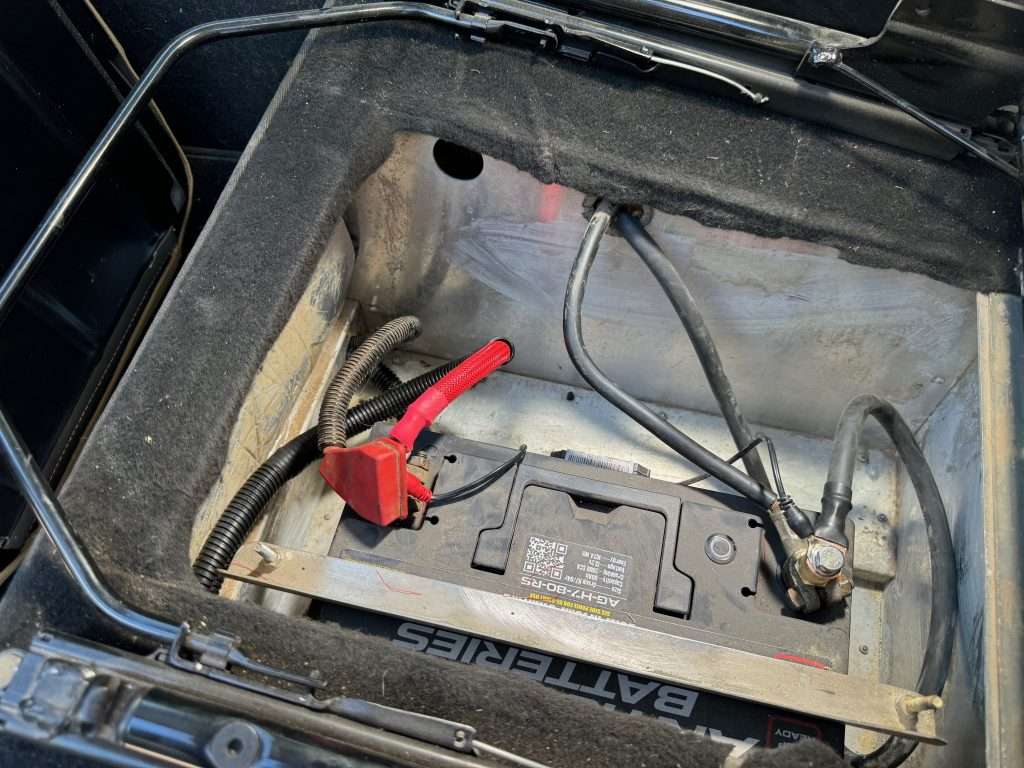
This “last hurrah” of wiring the winch was a bit of a project, and the new welding cables were more costly than I would’ve preferred. But now it’s done, the winch works great, and I can move on to other things!