
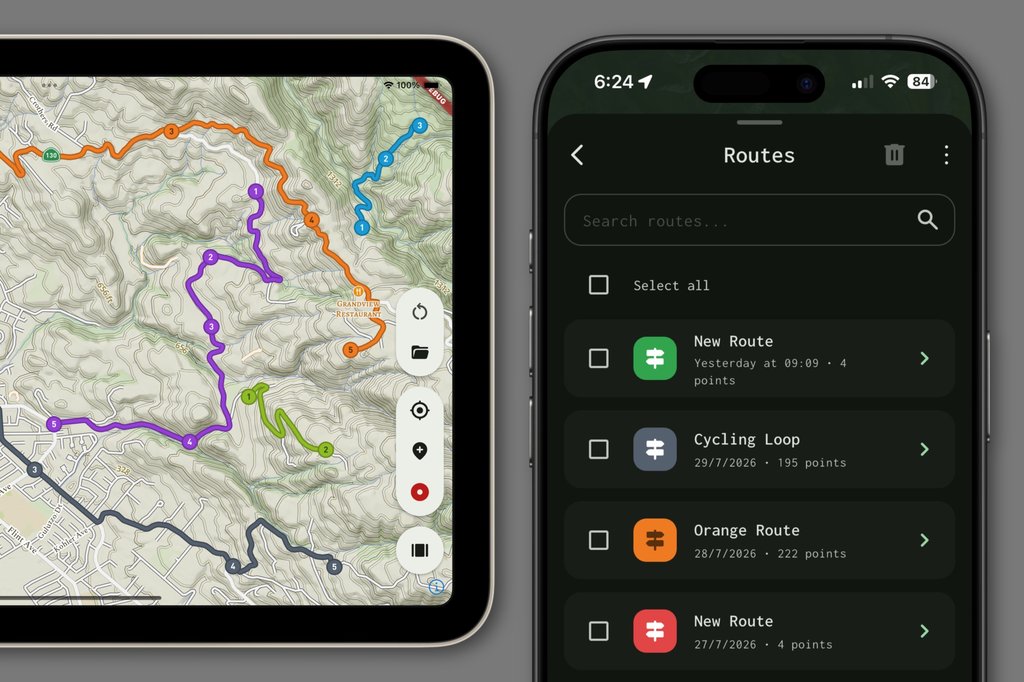
Routes can now carry their own color, so you can style yours however you like and tell them apart on the map at a glance. It’s an early pass, with more route styling and customization to come.
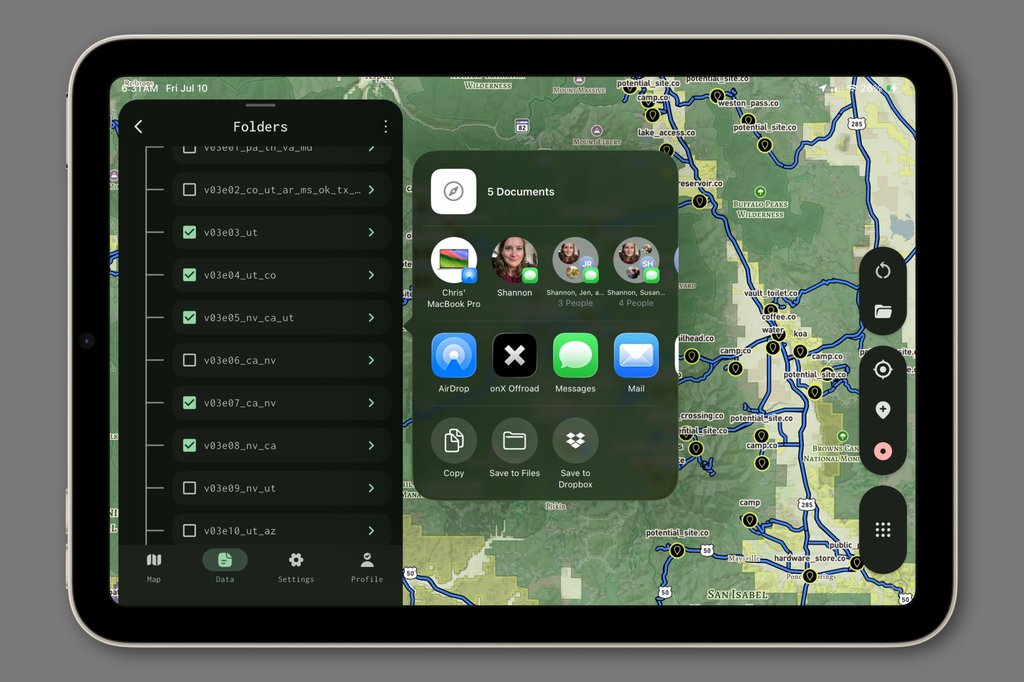
Exporting GPX data from Mapkind used to mean digging through the file system to find it. Now native iOS and Android share sheets send your data exactly where you want it to go.
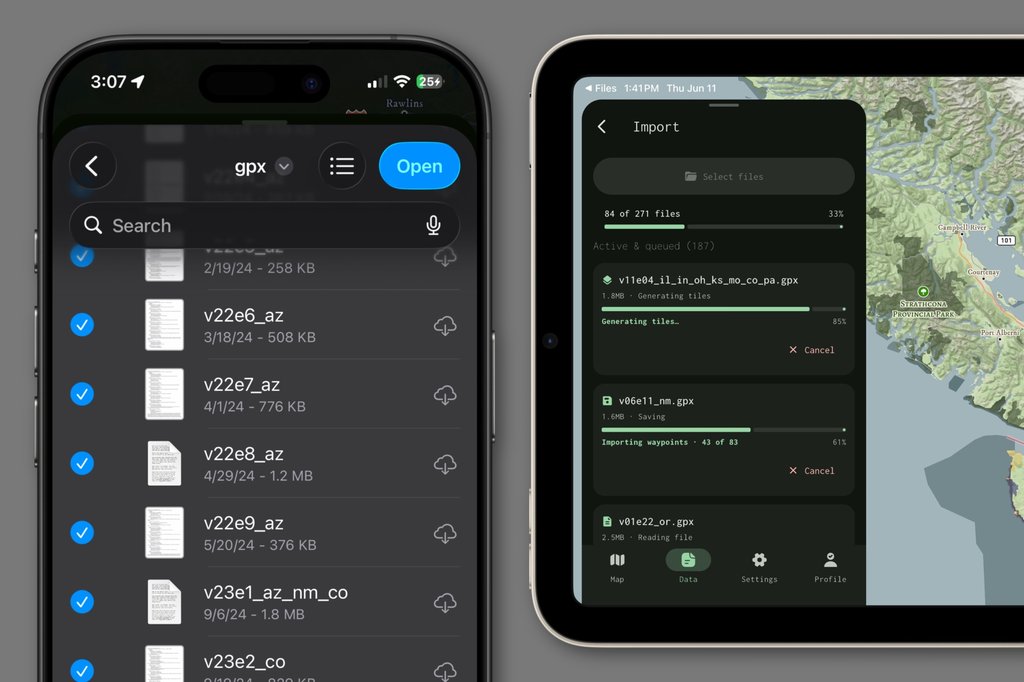
Moving GPS data between apps is what the GPX standard is designed for — but bulk imports can be unreliable. From the outset, we designed Mapkind GPS to solve that, cleanly and at scale.
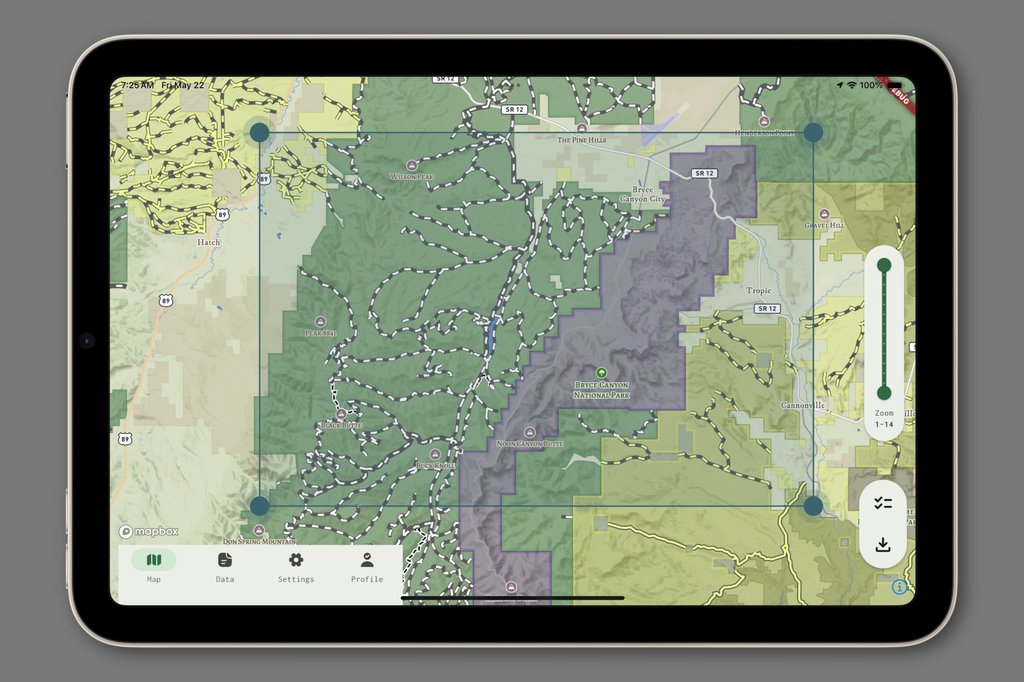
Offline download areas in Mapkind GPS now use draggable, resizable boxes — a more deliberate approach than capturing the viewport, with explicit control over shape and coverage area.
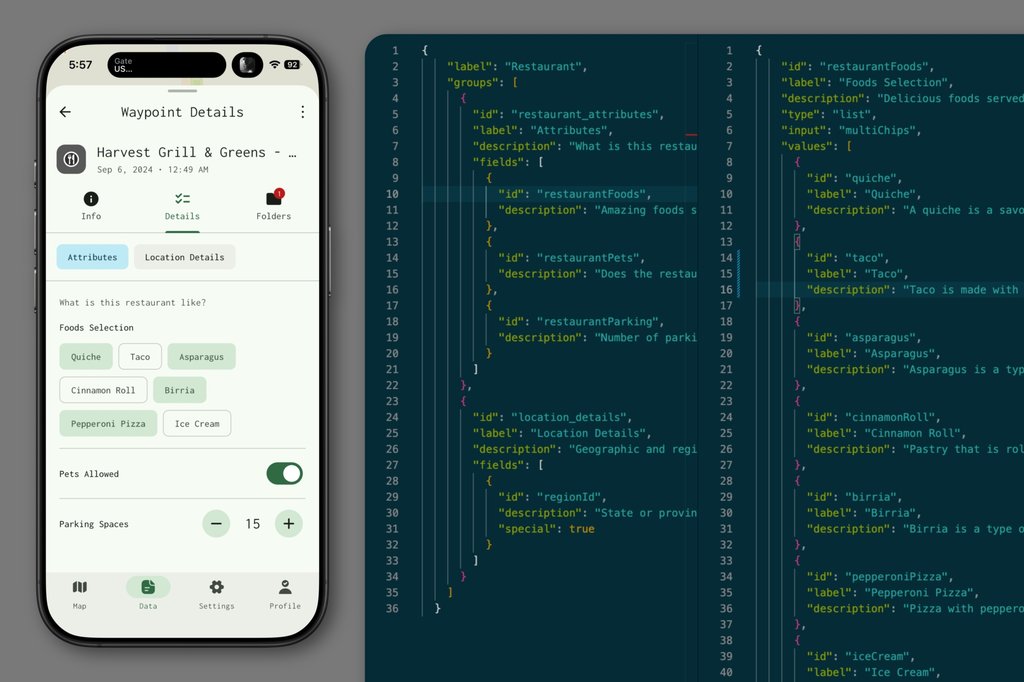
Standard GPS data only goes so far. Mapkind's extended fields let you log type-specific details — pet-friendly restaurants, primitive campsites — and filter your map by any of them.
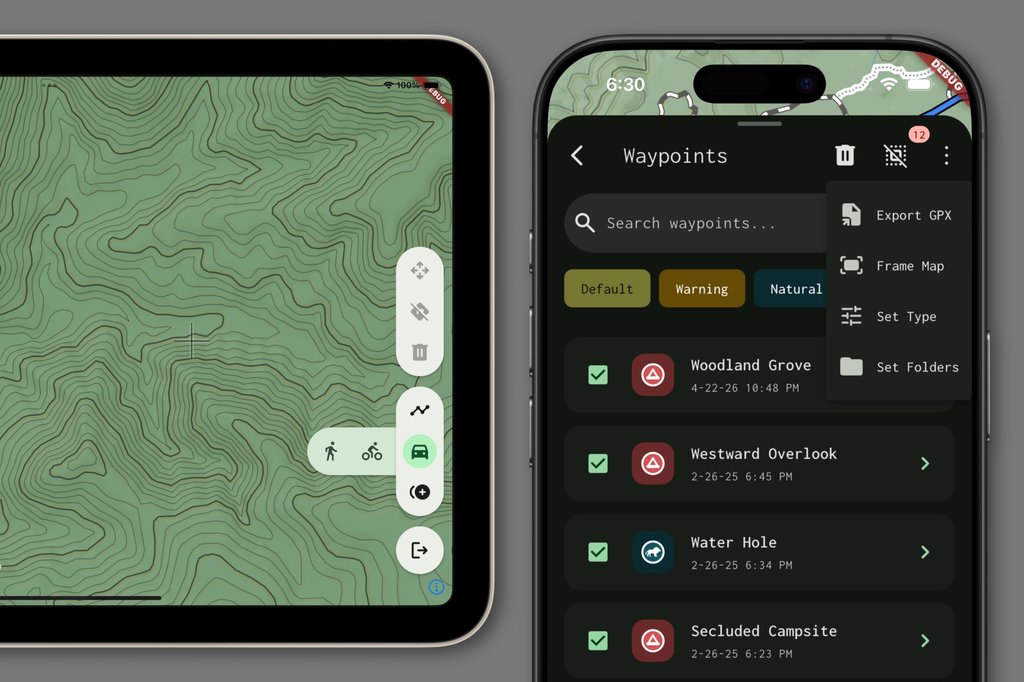
Route planning now asks how you travel — on foot, by bike, or by car. A new Select All shortcut speeds up bulk operations, and an entity write gateway keeps sync payloads properly tracked.
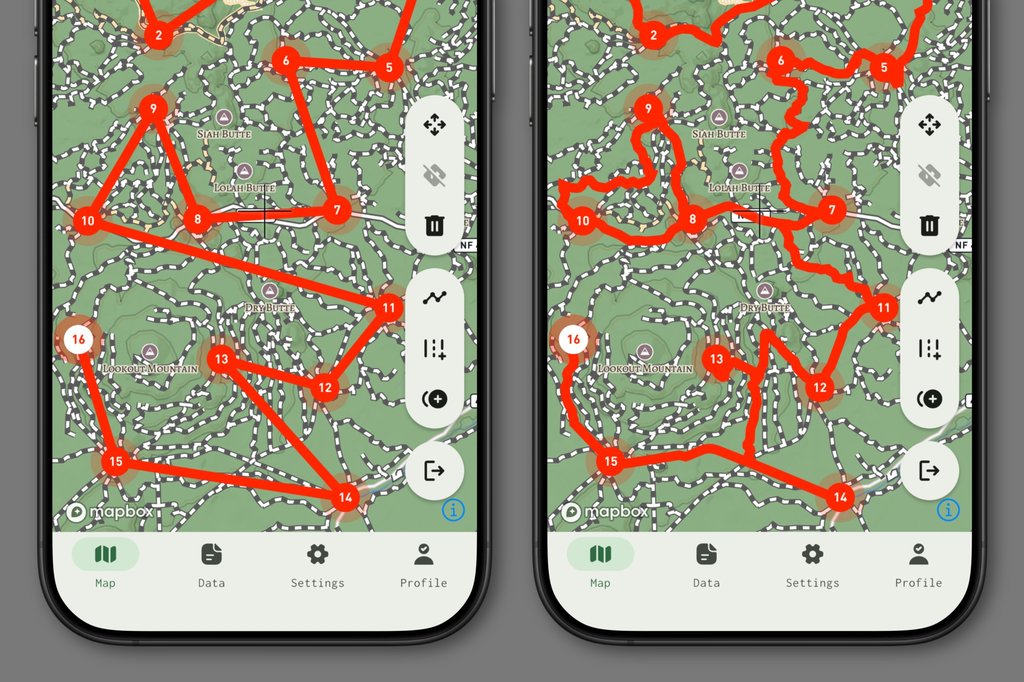
Wayfinding was slow and unreliable, often stymied by road transitions and data gaps. Now powered by a faster, more robust API, it consistently delivers the best route between your waypoints.
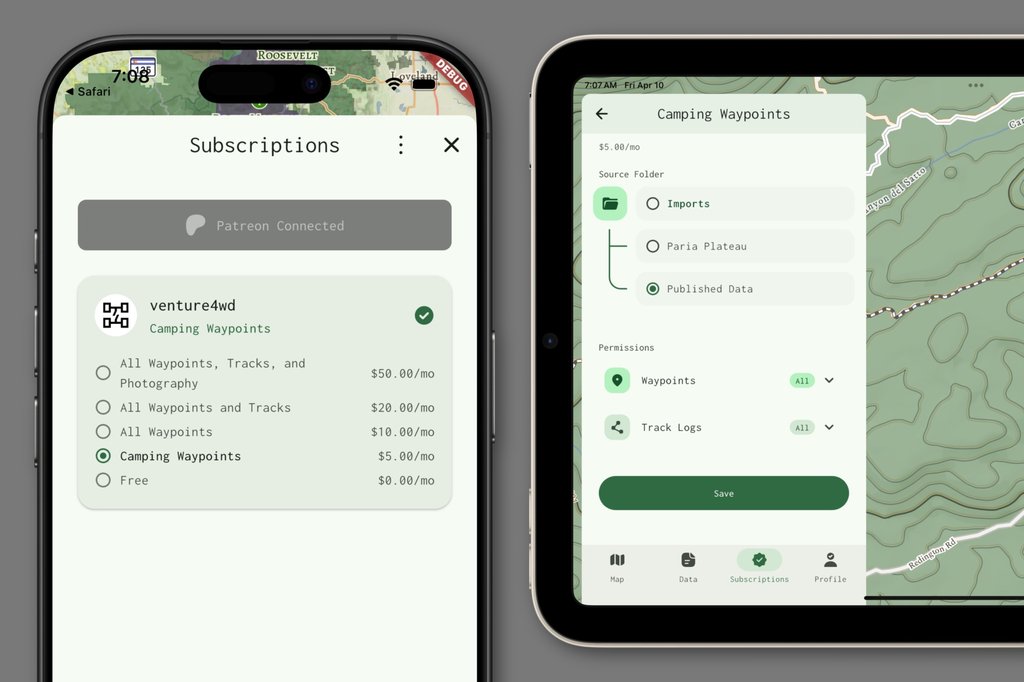
Mapkind GPS mobile now enables creators to share navigation data with subscribers — immediate visual access with creator ownership, subscription tiers, and vetting for stewardship.
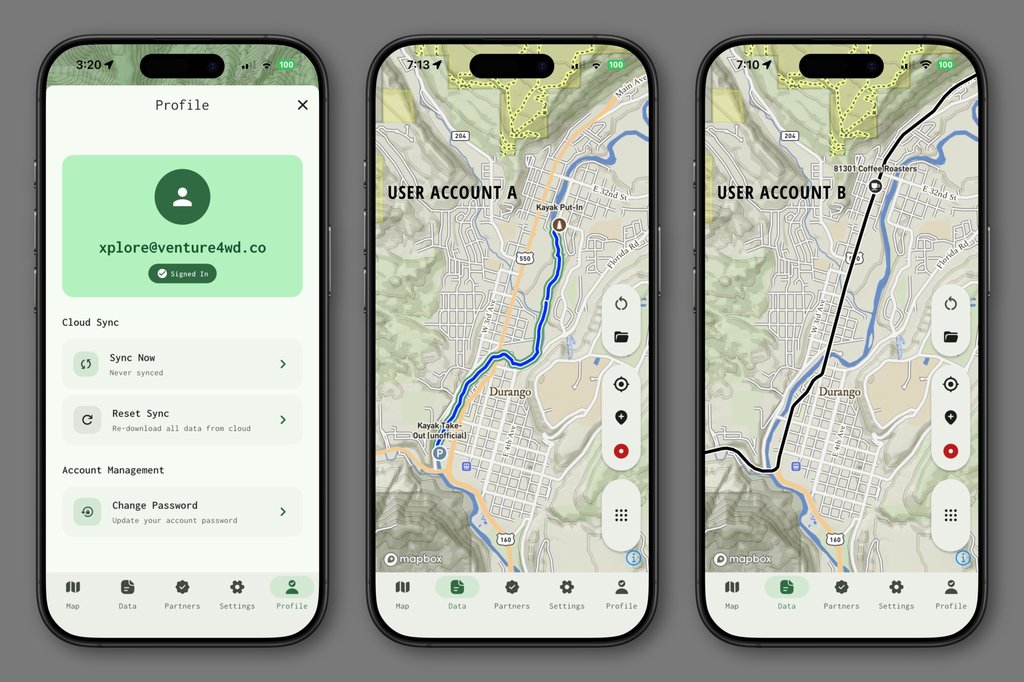
I'm tackling multi-account support — designing a system where each user's waypoints, routes, and track logs stay isolated while the app remains fully functional for people who'd rather not log in.
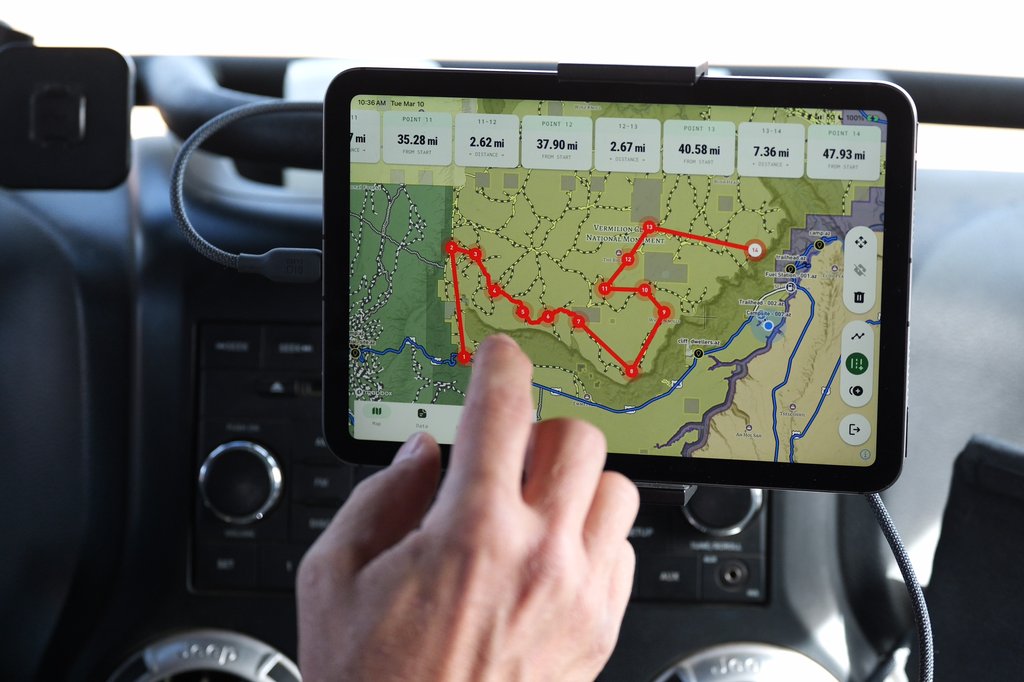
After a year in the garage, I took Mapkind GPS afield for its first real test. A bizarre stability bug emerged, but debugging from a canyon overlooking the Colorado River gave the frustration a silver lining: a rock-solid app.
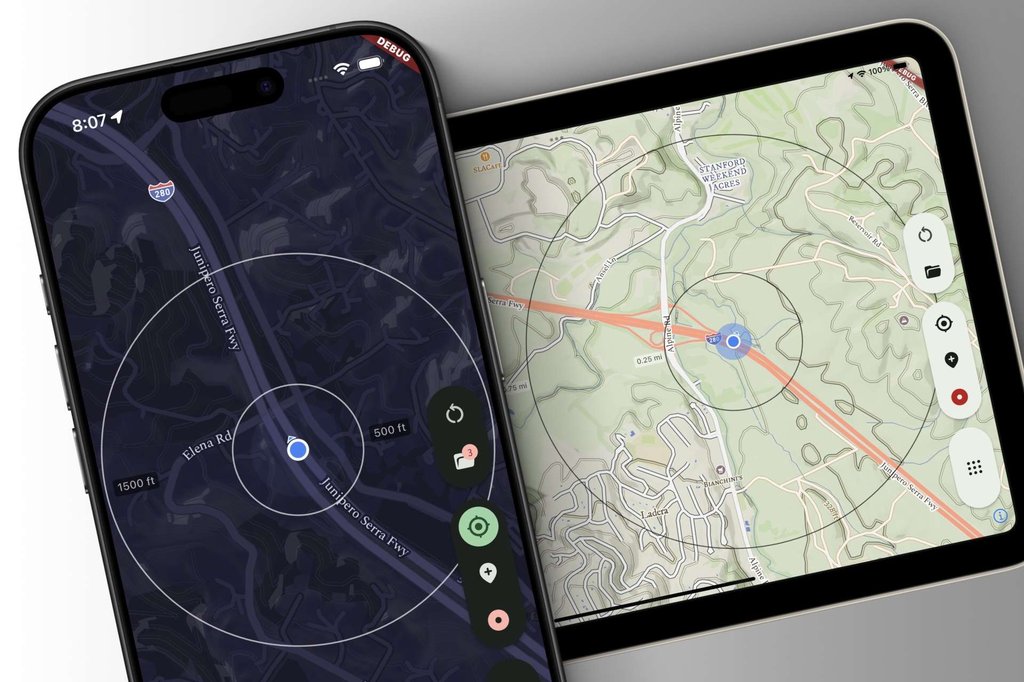
Borrowed from nautical radar and aviation displays, the new Range Ring HUD overlays concentric distance circles on the map — a simple, optional tool for gauging proximity to features at a glance.
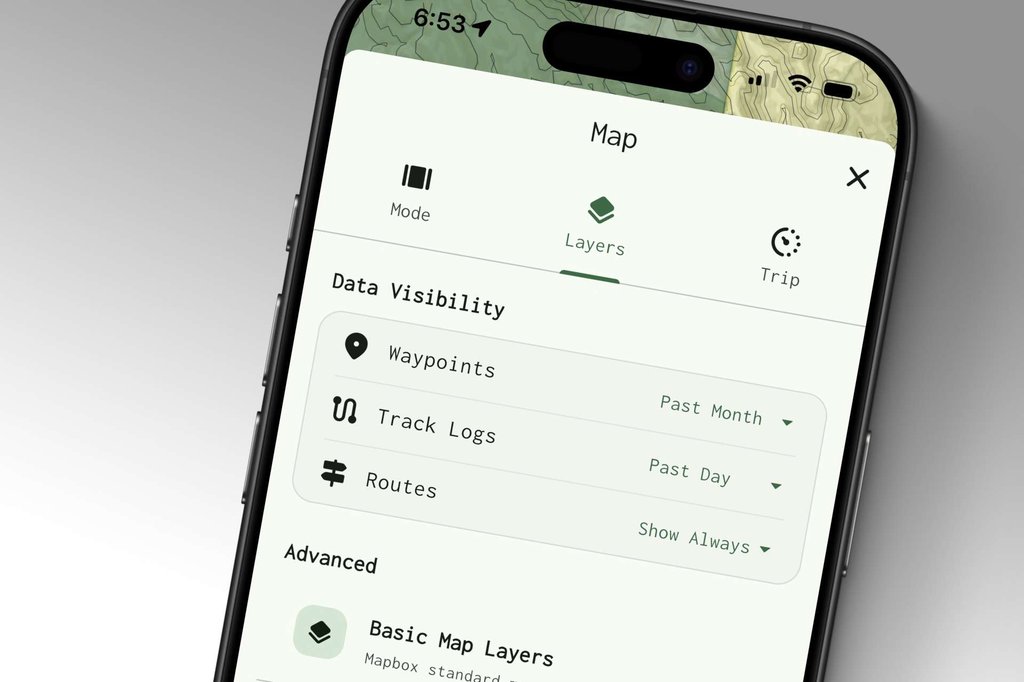
Years of recorded GPS data are worth keeping but not always worth displaying. New temporal visibility settings filter your map by recency, keeping things clean without sacrificing a single data point.
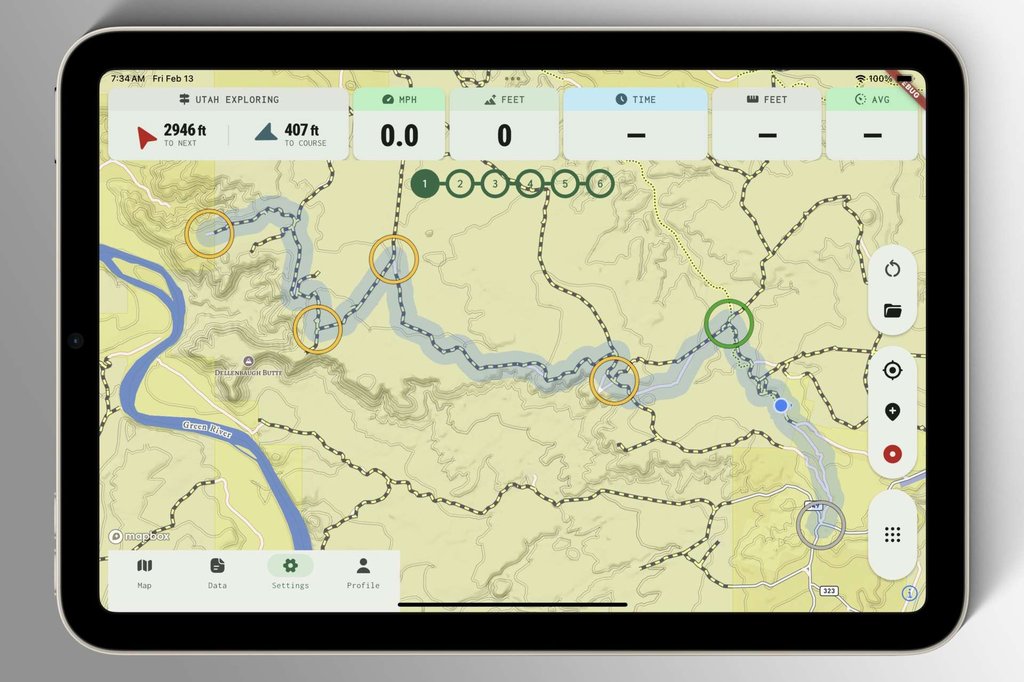
Routes come alive with proximity-gated checkpoints that sense your progress as you move. Wander off course, skip ahead, or rewind with a tap — not every adventure needs to follow the plan exactly.
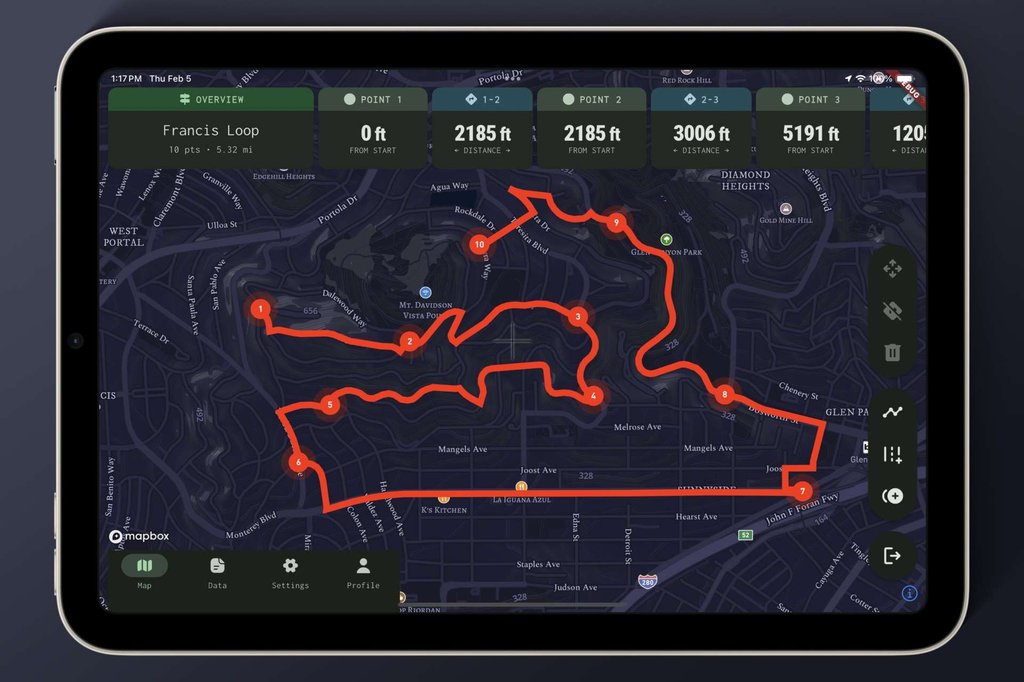
Routes are the biggest UX challenge in GPS app development — everyone plans differently. We’re building from strong fundamentals, with one guiding question: what makes us genuinely want to use this?
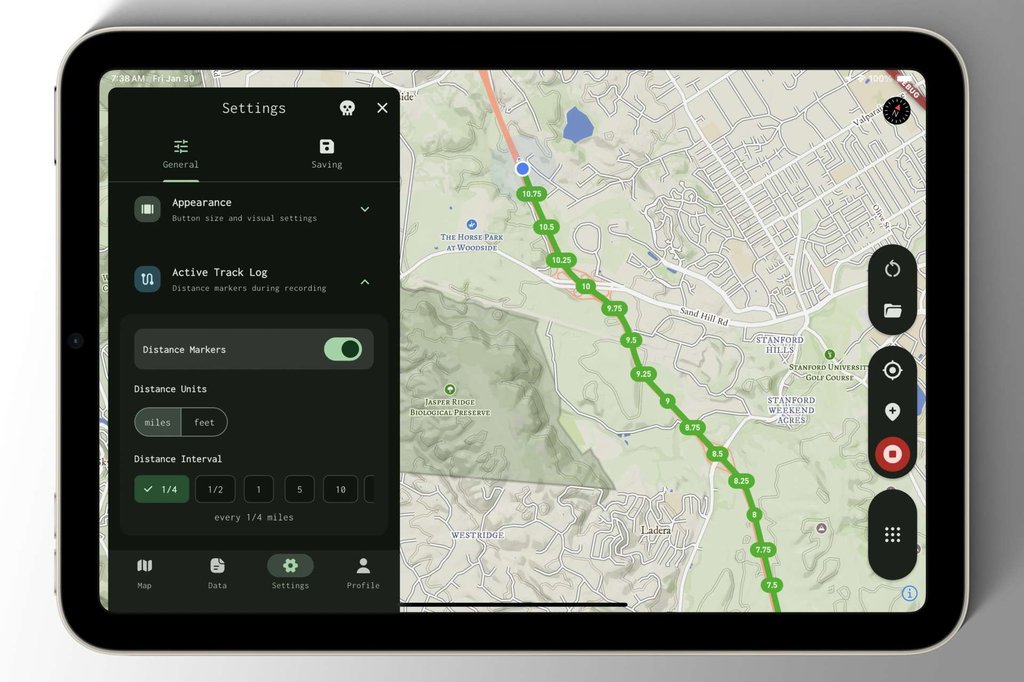
The active track log used to draw over everything on the map, obscuring the details you need most. Now it renders at a controlled depth, joined by new pill-shaped distance markers along your path.
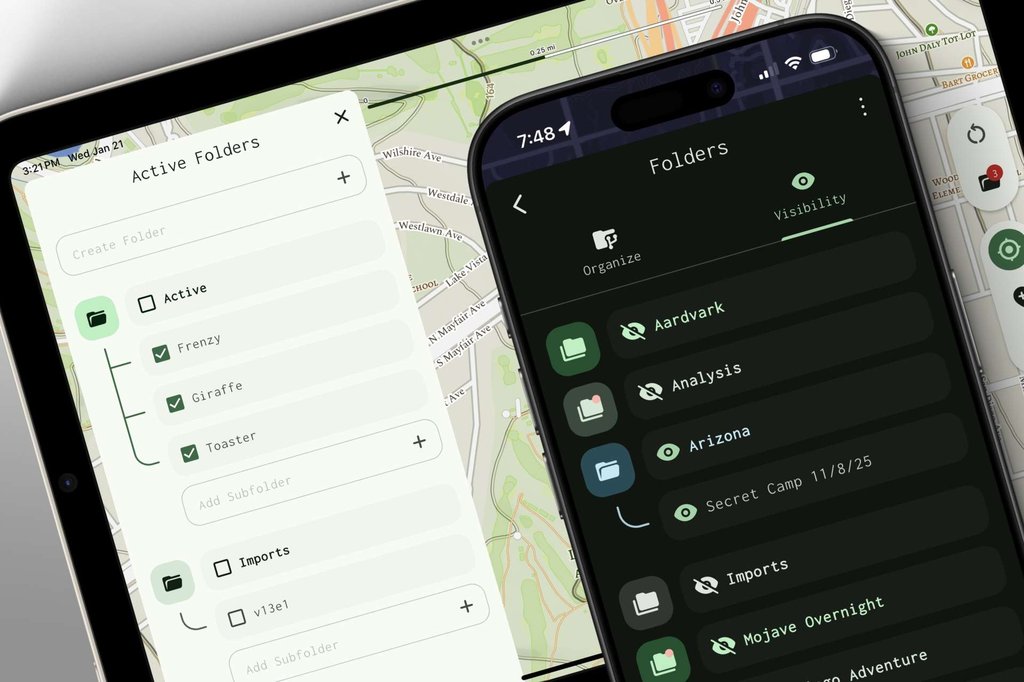
When your app demands a dozen variations of the same folder tool, reinventing each one is a costly trap. One modular picker with configurable behavior keeps the code lean and the experience unified.
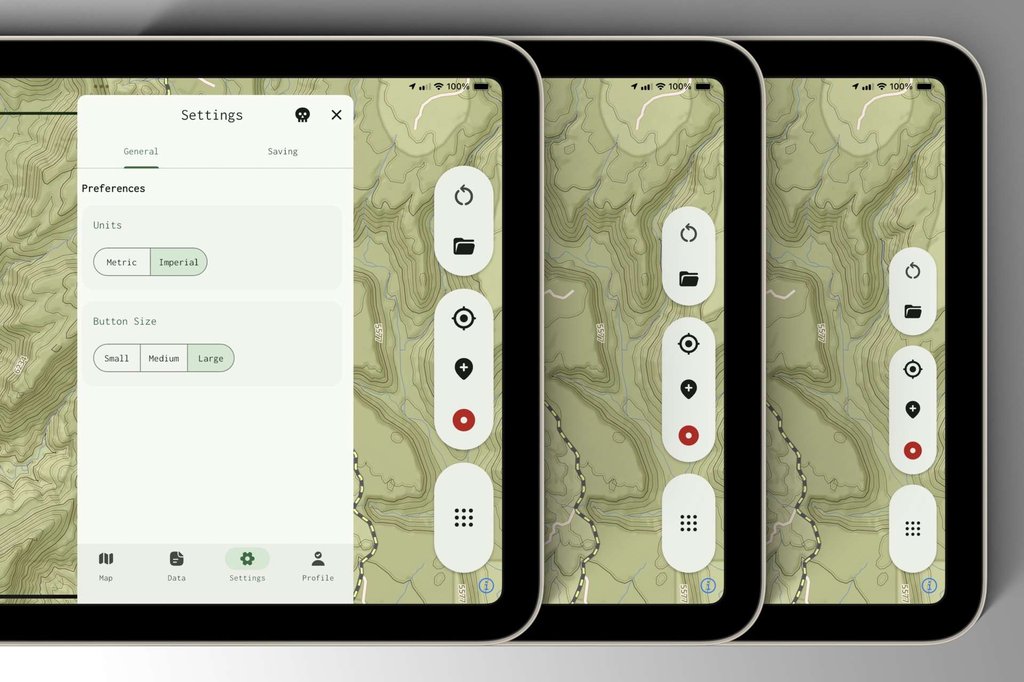
A rough desert drive exposed a painful truth — toolbar buttons were nearly impossible to hit while bouncing around. Customizable button sizing with device-aware defaults was fast-tracked that weekend.
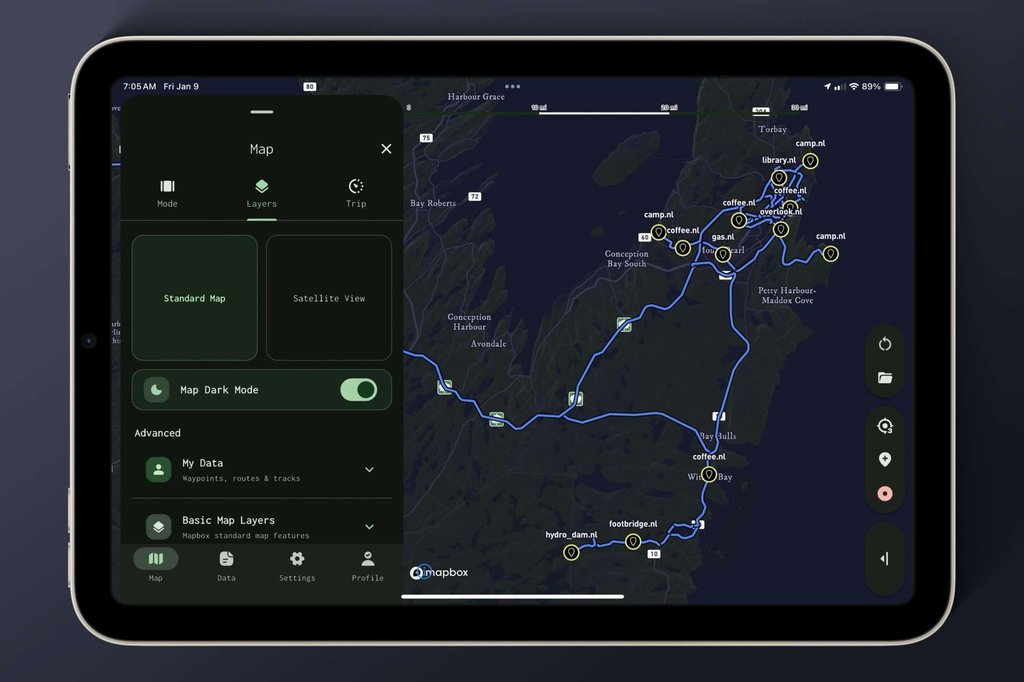
The UI already respected system appearance, but bending a custom-built map to a dark palette is an entirely different beast. This first iteration lays the groundwork for night-friendly exploration.
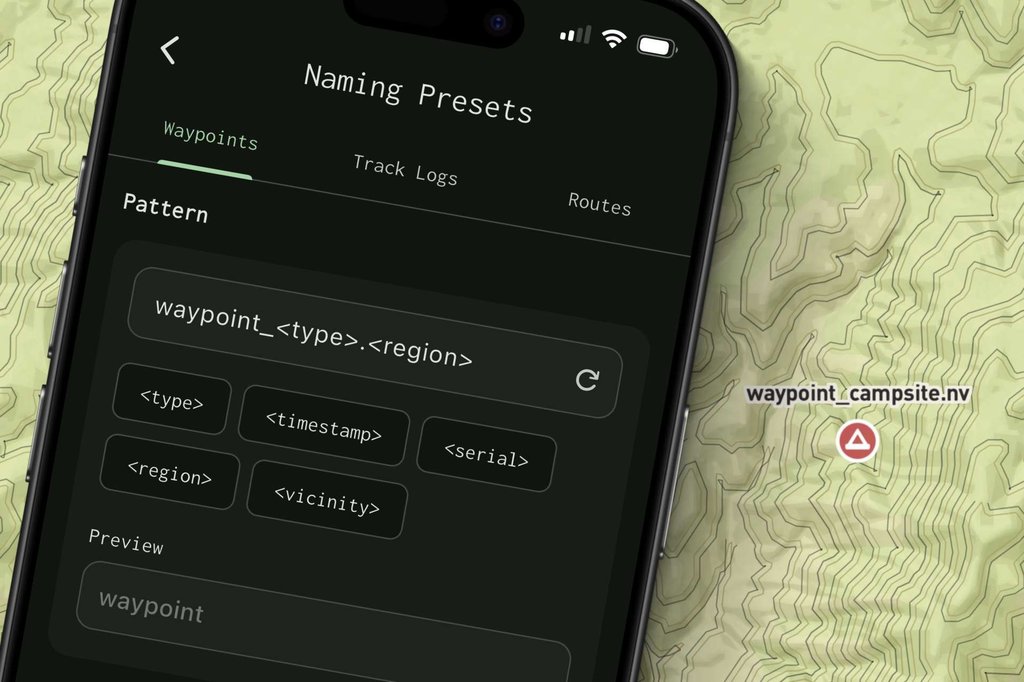
Everyone names their waypoints and track logs differently. Fully customizable naming presets let you save with a single tap and a meaningful, context-aware name that fits your personal workflow.
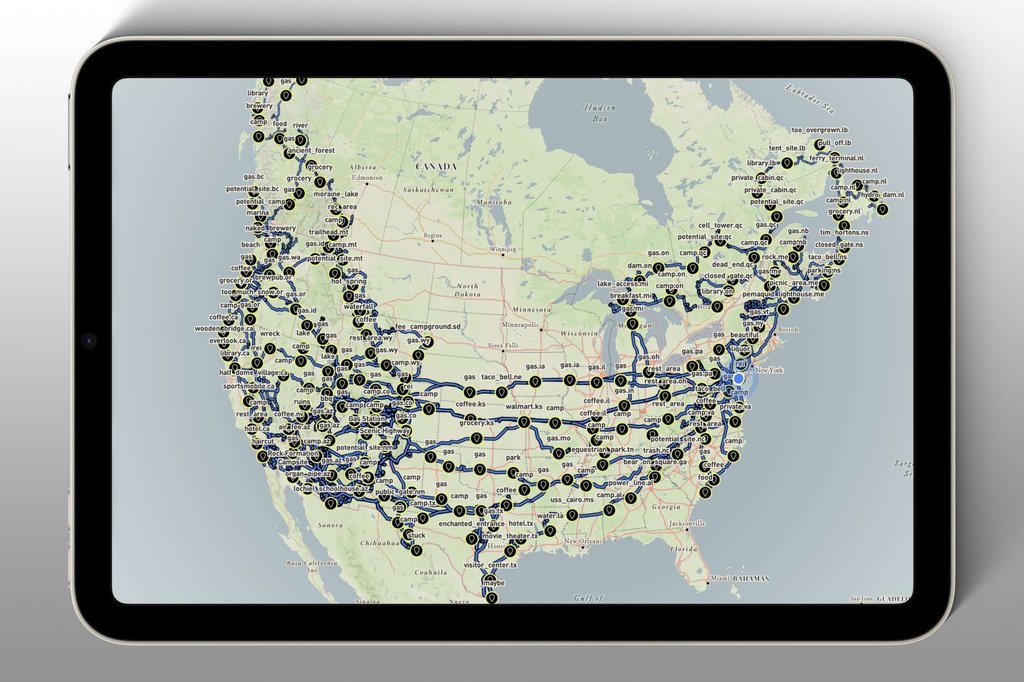
Six years of travel produced over ten million track points — the ultimate stress test. Using vector map tiles to keep rendered data on disk instead of in memory, the result is silky-smooth and stable.
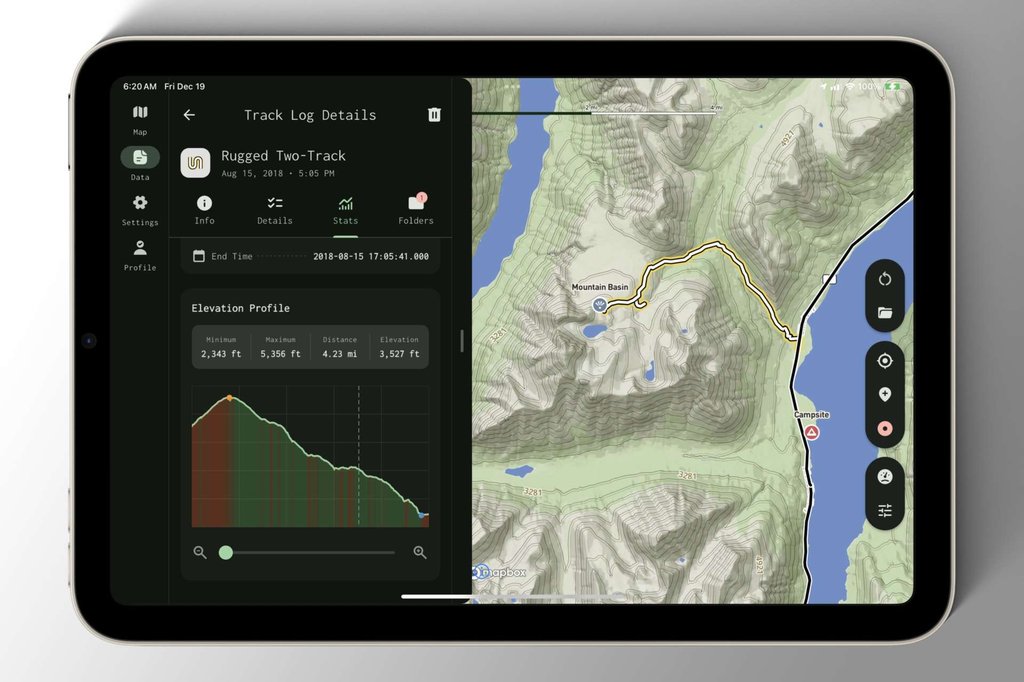
A Sunday spent exploring mountain roads above Tucson with an iPad on the Defender’s dashboard exposed what months of phone testing had concealed — the tablet experience needed a complete rethink.
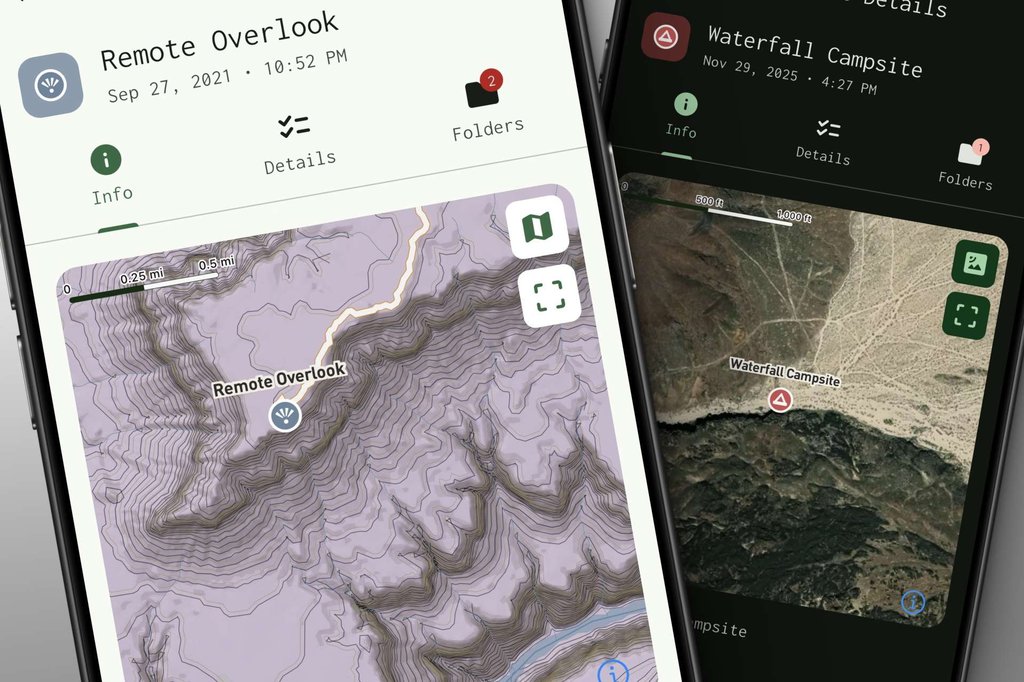
What began as a static thumbnail quickly proved too limited. The preview map now supports panning, zooming, satellite views, and a one-tap reframe — full control without leaving the detail view.
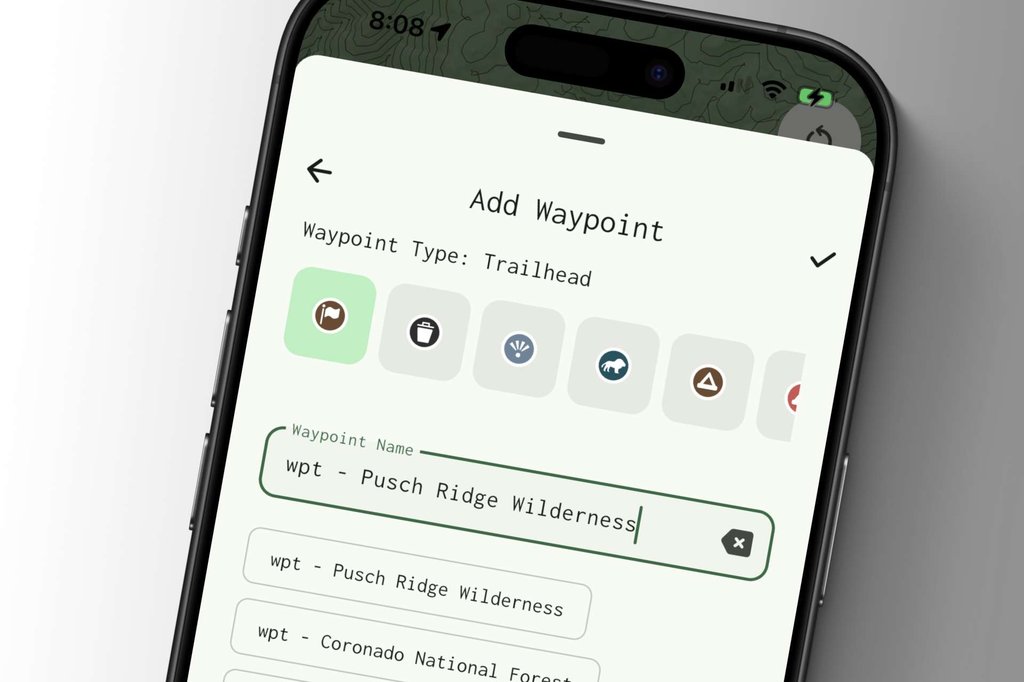
Marking a waypoint as a campsite, overlook, or trailhead unlocks richer data and smarter organization. The refined Type Picker makes categorization effortless — swipe the carousel or skip it entirely.
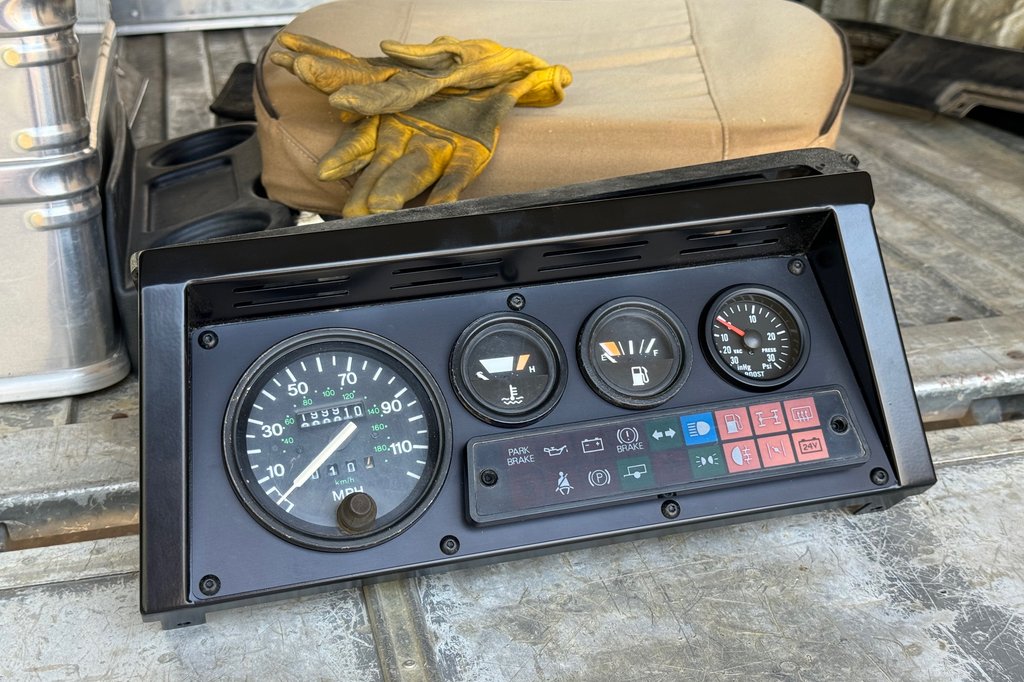
Years of wear reduced the Defender’s plastic gauge cluster housing to a floppy mess of broken tabs. A beautifully machined metal binnacle from Raptor Engineering in Sheffield put an end to that.
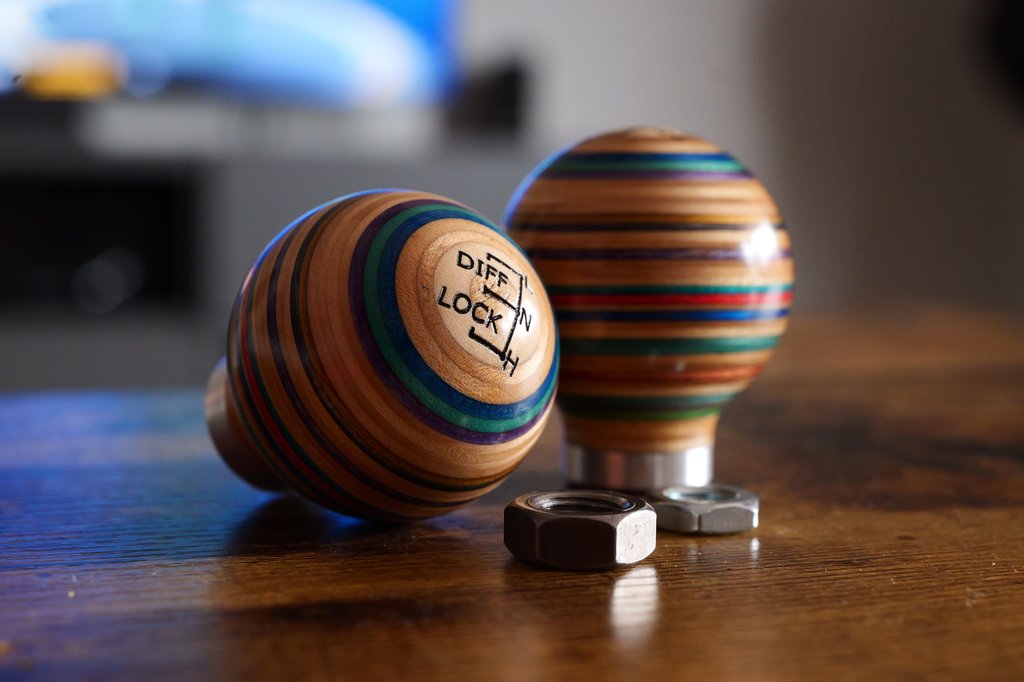
Sometimes the smallest personal touches make the biggest difference. Hand-crafted wooden shift knobs, fashioned from recycled skateboard decks, brought warmth and character to a well-worn interior.